Kootenai River in NW Montana, near Canadian Border

Kootenai River in NW Montana, near Canadian Border
photo by Gene Tunick of Eureka, Montana

Friday, February 24, 2012

Tip O'Day #301 - 3 Lessons Learned

Guest blogger H.L. Banks on a writer’s life.

I was a reader long before I became a writer, and still am. I owe so many authors a debt of gratitude for showing me what techniques work and what to avoid. Here are three things I have learned from those great ones and try to follow in my own writing:

Characters. I remember so many characters that came alive for me while I read. They lived on the page and still live in my heart and mind. They are fictional, but somehow they’re real. When writing, characters have often told me I’ve gotten them wrong (most recently, one of the main leads insisted he was NOT married with kids). I didn’t listen and he fell flat. I changed it and he came to life. I learned my lesson; I listen now.

I don’t sketch my characters before beginning to write but I do try to make them real for readers through their physical traits, actions, dress, and opinions. I think it is important for characters to experience the same emotions that readers do: pain, joy, love, anger and disappointment. Emotions motivate the characters and drive the story.

Plotting. I don’t outline before beginning to write as I, like a reader, prefer to be surprised. Stephen King has some very good things to say about this in his book, On Writing. I do keep a timeline. As usual, I had to learn this the hard way and spent many, many hours repairing potholes. There are times I vary structure depending on the needs of the story. It is not always a straight line from beginning to end.

I’ve learned to be careful as I shift action from past to present so the reader is able to follow what has happened and why. Hopefully, this care helps keep the reader’s interest. There are definite plot elements I always include: exposition, complication, climax and resolution.

Persevere. If you’ve just launched yourself into the life of a writer, never, never, never give up. Believe it or not, it’s only a few writers in the grand scheme of numbers who ever complete a manuscript!

Check out this author’s blog or Amazon link.

Thursday, February 23, 2012

Tip O'Day #300 - When Characters Go Crazy

Guest blogger Edward McKeown revisits The Land Where Characters Take Over Your Story. On February 21st, he had a guest post about a minor character who grew in importance until she starred in her own spin-off book.

This tendency expanded in my present series. Maauro is a 50,000-year-old android created for a genocidal war by a vanished species. She is found on an asteroid base by Wrik Trigardt, a disgraced military pilot. This was originally a gritty monster story without Maauro, featuring an Alien-style monster instead. My writing group hated that story. I dug into my fascination with anime and came up with a character of the deadly but oddly gentle, Maauro. Originally she had a corpse-like appearance then re-patterned herself to an anime appearance after capturing Wrik.

Maauro spoke to me in first person present tense, while Wrik spoke in first person past tense. I wondered why this was. Eventually l I realized that Maauro - who had perfect recall - did not look forward. Being essentially immune to time, she existed entirely in the now. Note however that I did not determine her voice. She did. I simply had faith there was a reason. I had no intention of doing a Pinocchio story wherein a robot character wants to become “real.” But Maauro had other ideas. She did not want to become a “real girl” but, as a machine made for a war that ended ages ago, she wanted to become more herself. Even her gender was an assumption and a choice. Maauro preferred the more complicated existence of a female consciousness. She decided that she wanted to explore emotionality and relationships; hers are cooler than ours as they are not rooted in sex and death.

So I ended up with a robot who acts more like a girl the longer she functions. Frankly the trip has been richer for my listening to her.

To learn more about Edward, check out his Amazon.com author page.

Tuesday, February 21, 2012

Tip O'Day #299 - Outta Control!

Guest blogger Edward McKeown on what happens when your characters grab the steering wheel.

Authors take very different approaches to writing characters. I have friends who are excellent authors, but who control their characters like puppet masters. The characters perform the plot as they are directed to do. On the other hand, my writing is full of surprises. I love it that way. Writing is an intensely visual experience for me. My stories play in my head with a nearly cinematic quality. I see the people, places and events. They do not always come to me in sequence but I have faith that there is a complete story. If I continue to pay attention, I’ll eventually see the entire story and write it down. I know it will make sense.

The big surprise for me was how much collaboration takes place between my characters and me. In writing Was Once a Hero, I created Shasti Rainhell as a story device, a way to protect my everyman, Robert Fenaday, as he descended into the world of privateers in search of his missing wife. Shasti, genetically engineered and more powerful than any normal human, was not content with her role. She started telling me about her abusive past, and how fascinated she was with Robert’s love for Lisa and his unreasonable search. I learned that while Robert was searching for Lisa, Shasti was also searching for her humanity. What had started out as an adventure story developed a complex romantic underpinning.

This new character arc became almost as strong as the original main arc. Robert and Shasti followed their separate paths and eventually intertwined in their own affair. I preplanned none of this but it lead to the Fenaday trilogy and a standalone Shasti Rainhell book.

Edward will be back tomorrow with another out-of-control character. To learn more about this author, check out his Amazon.com author page.

Monday, February 20, 2012

Tip O'Day #298 - Look for Your Fairy Godmother

Guest blogger Holly Robinson finishes her three-part series on publicity for both traditionally published authors and Indies.

Befriend Book Bloggers. Book bloggers are our “fairy godmothers,” as my friend Terri Giuliano Long, a best-selling indie author, pointed out in one of her blogs recently. Without their support and generosity, many of our books would never be read. Check out as many book blogs as you can find. When you discover a book blogger who reviews books like yours, write a personal note and ask if you can send a review copy. You might want to send her an e-book because it's cheaper than mailing a paperback, but if she says she'd rather have a paperback, send it! Media mail is cheap postage and print-on-demand paperbacks are inexpensive, too. Remember: she is the one doing you a favor, and it's a good investment. Most book bloggers post reviews on Amazon and Goodreads; once they're up, be sure to tweet and post those links on your own pages. Add them to your Amazon Author Central page as well.

Look for Out-of-the-Box Marketing Opportunities. Just like parents know their own children better than anyone else can, you know your book: its content, style, and target audience. Use that expertise in thinking about out-of-the-box marketing opportunities. I contacted pet groups when I published The Gerbil Farmer's Daughter, for instance, and found a loyal following. For Sleeping Tigers, I'm contacting breast cancer groups, because my main character is a breast cancer survivor, and I know other cancer survivors will connect with this story about hope and starting over.

Lasting Impressions. All of your marketing efforts will eventually come together. If you're a parent, think about how many times you had to show your toddler peas or carrots before that child stopped thinking of veggies as too weird to eat. The same is true of your book: keep putting it out there, and pretty soon people will start saying, “Hey, I remember that title. I meant to read that book!”

Learn more about Holly at her website.

Sunday, February 19, 2012

Tip O'Day #297 - An Author's Advocate

Guest blogger Holly Robinson on publicists, book launches and giveaways.

If you're traditionally published, expect to be assigned a publicist. It is that person's job to advocate for your book with print media, radio and television stations, bookstores, and online sites. Make yourself part of the publicity team. If the publicist suggests that you do something, do it! The more you help your publicist, the more she can help you. On the other hand, don't take it personally if the publicist is too busy to do more than a few early rounds of marketing pushes. She'll probably have a minimum of time and an even smaller budget to devote to your book. You'll have to keep up the momentum. Likewise, if you're an indie author, be prepared to devote part of every week to promoting your books. Writers with deep pockets may find it easiest to hire a publicist; even then, log the hours if you want results.

Your Book Launch Is What You Make It. Long, long ago in a galaxy far, far away, a book launch in traditional publishing was a Very Big Deal. Authors were sent on book tours to do readings and signings on the publisher's dime. The pre-sales of books, both online and in bookstores, determined pretty quickly which books were hits. That's because they knew that shelf life in bookstores was brief. This is all changing. Sure, it's great to gain traction the minute your book is available. However, with the advent of online book sellers and e-books, your book will stay around forever. Don't despair if it takes weeks, or even months, to see sales results. Keep at it, and eventually the numbers will climb.

Give Away Your Books. Traditional publishers know that the best way to sell a book is to give it away first. They target who they give it to, of course—book reviewers, TV producers, book clubs—but, ultimately, the idea is to “seed” your book around the country so that people start talking about it. You can do the same thing on your own. Participate in giveaways on your own facebook author page or through Goodreads, or ask book bloggers if they'll host giveaways for you.

Holly is the author of the novel Sleeping Tigers and The Gerbil Farmer's Daughter: A Memoir. Check her out at her website. She will return tomorrow with three more publicity ideas for both Indies and traditionally published authors.

Saturday, February 18, 2012

Tip O'Day #296 - Publicity, Indie vs Legacy

Guest blogger Holly Robinson on “The Good, the Bad and the Mysterious about Your Publicity Campaign.”

Now that I've got feet in both camps, I have a unique perspective on the good, the bad and the mysterious truths about book marketing. My memoir, The Gerbil Farmer's Daughter, was published by Random House. I leaped into the indie world when I self-published my first novel, Sleeping Tigers, a couple of months ago. My second novel, The Wishing Hill, will be published by Penguin in spring 2013. These experiences have taught me a lot about book publicity, but I'm still learning new things every day. There are some differences in how traditional and indie books are publicized, but those differences are shrinking by the nanosecond. The truest thing I can tell you is that, no matter how your book makes it into the world, you'll need to take an active part in the publicity. Here are a few tips to get you started.

Mine the Free Resources. The Internet is a wonderful tutor. There are more free resources out there about marketing your book than you'll ever have time to read. Google anything from “picking a book cover” to “social media for authors,” and you'll get enough hits to last through a few thermoses of coffee. Make good use of these resources. Two of my favorites are Novel Publicity's “Free Advice Blog” and CreateSpace's “Free Publishing Resources.”

Prepare Your Platform. No matter who you talk to in publishing — agent, editor, publicist, or sales team — they'll tell you that their ideal is a good book written by an author with a “solid platform.” Basically, that means that they want you to be famous before you even give them a manuscript — or they want some hook, like you chewed off your arm during a battle with a grizzly bear. (Even then, they hope you've been blogging about it.) One easy way to start building your platform is by crafting a virtual identity. Social media tools are free and easy to use. Start a blog, create an author Facebook page, get a Twitter account, and set up a Goodreads page. Give people useful information — don't just pimp your book. If you know how to do something — anything from fly fishing to quilting — blog about that, guest post on other people's blogs, and people will start following you. Yes, it's time consuming, but it's also incredibly fun to connect with people. If you're trying traditional publishing avenues, it will help your editor sell your book to the publisher if she can prove that you have an active presence online. Indie or traditional, you're cultivating a loyal readership.

Learn more about Holly at her website. Tomorrow, she returns with comments on book launches and giveaways.

Friday, February 17, 2012

Tip O'Day #295 - Plotter or Pantser?

Guest blogger Jeannine McAllister on Pantsers vs Plotters.

Not long ago, a colleague wrote about how lost she was in her story. I asked her if she was a pantser or a plotter. She said she was a pantser.

Pantsers are writers who sit down and create a story by the ‘seat of their pants.’ They can write linearly from beginning to end, figuring things out along the way. Being able to write whatever comes to mind without any guide is a skill. They construct the book in their mind and just type. The problem with pantsers is they generally spend a lot of time in editing after the first draft. Also, it is not unusual for them to loss their path along the way to the end of the book because there is no road map.

Plotters plan the book from beginning to the end before they start writing. It is said that prior to computers most writing was done in chunks. Plotting allows you to work non-linear in chunks. Plotters need for how much planning they do varies; from a hand written note on a napkin, to a notebook full of handwritten scenes, to a thirty to fifty, maybe a hundred, page typed outline. Generally, they know something about each chapter, sometimes each scene, before they start writing. Plus, they have done character and location sketches. Plotters may spend three or more months up to years developing their plot outline. That’s a problem with plotters. They can spend so much time plotting, getting every detail perfect, that it ends up never getting finished, or they end up with enough material for a ten volume series before they start writing.

While plotters spend a lot of time before they actually start writing, the advance time often decreases the time they spend editing in the end. Pantsers don’t spend much time, if any, in the beginning; they spend it at the end editing.

If I sound biased towards plotting it’s because I hate editing, but I’m also envious of pantsers.

For further reading, check this out.
Dixon says: I like Jeannine's analysis of the difference between planners and pantsers. However, I suspect that the majority of writers are found somewhere between those two extremes. I'm sure there are very few writers who sit down without an idea what they're going to create. For an extreme planner, I'm reminded of Margaret Mitchell, who plotted out Gone With The Wind to the smallest detail. Then, first of all, she wrote the last chapter. Many writers do that, to make sure they'll have a satisfying conclusion. Then Ms Mitchell wrote the next to last chapter. And then the one before that. And the chapter before that. She wrote the entire saga backwards. Now that's a dedicated planner.
In my novels, I have a very good idea of what will happen in the first 3-4 chapters, and a vague concept of how my story will end. Then I "write in the headlights." With each page that I write, I can see a bit further up the road. When I wrote The Assassins Club, I had a moment of clarity about two-thirds of the way through, when I could see exactly how the final two chapters would be choreographed. The final version of those pages varied little from that original vision. Thank you, Voices In My Head.

Thursday, February 16, 2012

Tip O'Day #294 - Living in 2 Worlds

What Facebook means to guest blogger Jo Marshall.

What I like most about Facebook is the opportunity it offers to become involved instantly in causes such as donating books to at-risk students, or signing petitions. I try to avoid politics because my pages represent the Twig Stories series and its underlying message of care for our natural world. My royalties are donated to nonprofits so my Facebook pages are not about me as an author. They are meant to be a reflection of the theme of the Twig world - climate change, endangered wildlife, shrinking glaciers, and adaptation to a warming world. These are important themes, and I am privileged to represent them via Twig Stories.

So I'm excited to use Facebook and proud I've figured out how, since I'm no longer young. Learning new tech skills becomes more painful every day. I'm very, very interested in all my fascinating Facebook friends! Their world is much more expansive, entertaining, and educational than mine. What I love most about all of them is that they are happy, busy, and encouraging! I'm learning so much about them, and from them.

Perhaps all of this has been said by others before, but I hope the goodwill extended to others in the Facebook community is carried by them into the 'real' world. I think their tolerance and cheerfulness shown here on these pages might make a difference in how we interact with one another elsewhere...or not.

But it has made a difference for me. Now I have this wonderful, meaningful and educational place I can come to everyday, and know one of my Facebook friends will always make me laugh.

Learn more about Jo Marshall at Twig Stories.

Wednesday, February 15, 2012

Tip O'Day #293 - Bad Covers Kill Good Books

Tom Isbell, author of Southern Cross, on book covers.

Cover design is important for pBooks as well as eBooks, but for slightly different reasons. Customers in a bookstore will be drawn to your book based on its front cover (or spine, depending how the book is displayed). They will read the back cover and maybe turn to the first chapter, all in a matter of seconds. That’s all the time you have to hook them.

Before deciding on the basic design for your cover (whether you do it or have it done professionally), take time to go to a local bookstore and look at the covers of books in your genre. The major publishing houses have spent a lot of money determining what cover designs sell books. It’s free advice, so take it.

The cover for an eBook is almost more important than one for a pBook; in most cases, the potential customer only sees a postage stamp sized picture of your wonderful cover. Keep it simple. Fancy fonts may not be legible when reduced and the cover art may end up looking like a dark blob. Play with ideas and reduce them to thumbnail size to see if they look good. Ask your critique group or other writing friends to evaluate your cover.

Check out Tom at his website or on Facebook.
Dixon says: I was fortunate to work with a professional, Suzanne Fyhrie Parrott of Unruly Guides, on my first published novel. After discussing The Assassins Club with me, she came up with 4-5 draft concepts. With my permission, they were posted on Facebook, enabling other authors and publishing pros to weigh in with their opinions. Their input gave me confidence that the eventual final cover was, in fact, the most effective choice.

Tuesday, February 14, 2012

Tip O'Day #292 - Setting & Theme

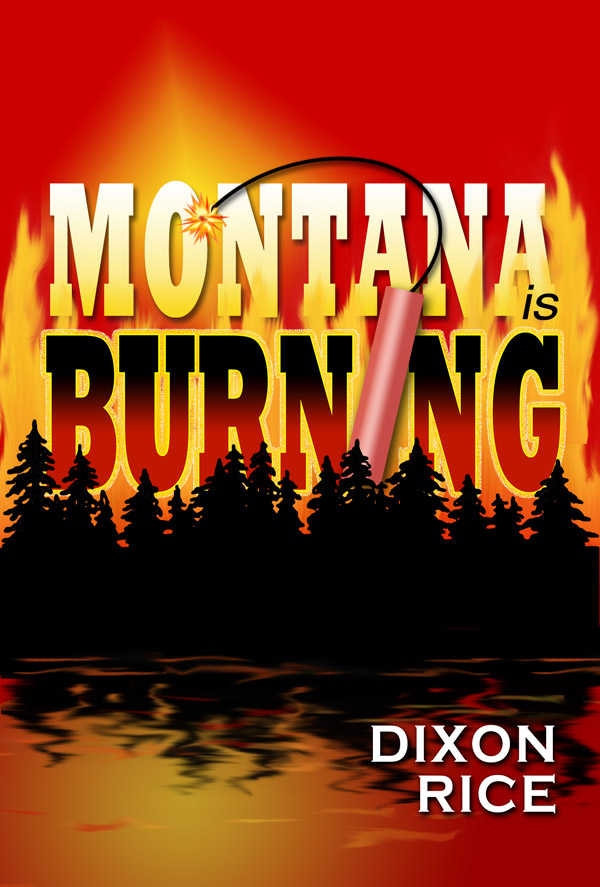
The two previous blog posts have talked about the importance of setting, and the possibility it can actually become a character in your story - think The Perfect Storm. Another consideration is the use of setting to reinforce the mood and themes of your story. There’s a reason few noir scenes are set on sunny California beaches. The following is the third excerpt from my forthcoming thriller, Montana is Burning, which will be out in Kindle this summer.

The golden eagle sliced through the air, miles from where scattered rain drenched a small clearing and the stream that ran through it. She spiraled upward with little effort, riding a thermal current as she waited for the storm to break up.

The eagle was the perfect aerial predator, with cruel talons and a beak that could disembowel an adult sheep. She was death from the sky. Lacking an owl’s night vision, she couldn’t hunt after dark, even though high winds had kept her pinned to her aerie for more than a week and starvation threatened.

She circled and watched. In a valley far below, dry lightning struck a large snag and it burst into flames. Since no animals fled from the fire, the eagle quickly lost interest. She flew on.

The isolated storm finished venting its fury on the clearing and sped east. Dim memories drew the eagle above a stream where salmon returned each summer’s end and trout grew fat and pink on the helpless spawn – ancestral memories of hunts and feasts by eagles long dead but memories no less real. The raptor smelled blood and tasted flesh as if the kills had been her own.

The great bird spotted the glitter of whitewater skittering across rocks made smooth by eons of glacial runoff, and saw dark shapes carving their way beneath the surface.

She dipped a chocolate-brown wing and dropped below the air current. The eagle descended slowly at first, then folded her wings next to her body to plunge like lightning drawn to earth. Her freefall lasted hundreds of feet before she spread wide her wings, pulling out of the meteoric dive. With hardly an eddy on the water’s surface, she ripped a trout from the icy stream and started back to her craggy perch, blood on her talons and savagery in her cry.

As she climbed through the warm air, the golden eagle spotted the valley where lightning struck a snag earlier. Flames burned greedily and jumped to neighboring scrub pine. Only the eagle saw.

In the great bird’s wake, a wolf erupted into the opening and sprang across the stream, but the whitetail he had been stalking already bounded far down the slope, startled by the exultant screech from above. Stopping at the edge of the clearing, the wolf listened to the doe’s flight.

The wolf turned from the fading sound of escape. He jogged toward remembered cattle.

The world, after all, was full of prey.

Monday, February 13, 2012

Tip O'Day #291 - Setting as a Character

Setting can become a character in your story. In my novel Montana is Burning, a forest fire serves as not only backdrop, but also antagonist and instigator of events. In this second part of the novel excerpt, the fire faces death but survives.

The golden eagle circled high over a remote valley twenty miles west of Kintla, Montana.

A burning snag sent a faint column of smoke aloft. The eagle knew fire usually flushes small animals from their hiding places but not this time. A pine beetle infestation had devastated the valley, leaving behind mostly rotten stumps and scarcely any healthy trees. Despite a huge insect population, there were almost no green branches and so hardly any rodents, birds or small game lived there. Above the size of centipedes, practically no life survived in the valley.

The great bird found a sturdy branch high in an ancient pine. She waited.

Like waves rippling out from a pebble dropped in a fiery lake, a circle of flame spread around the snag, painting the pale underbelly of the clouds an angry red. The lower branches of several nearby spruce caught fire. The expanding pool lapped across the matted carpet of pine needles, burning into the forest floor until it ran out of air.

A dark cloud passed overhead, so heavy with water vapor that it began to condense. A shower doused the valley and the eagle sought shelter on a lower branch.

Flames hissed and wavered and then finally failed. As if to signal the fire's defeat, the blackened snag teetered and fell. A cloud of ash rose into the damp air then pelted back to earth with the rain.

The snag lay on its side like some grotesque wounded beast. Sheltered from the rain, its underside reflected a dim glow against the ruined forest floor. The fire lived.

The golden eagle took wing and continued her hunt.

This three-part novel excerpt concludes tomorrow, when wolf and eagle meet one another.

Sunday, February 12, 2012

Tip O'Day #290 - Setting is Crucial

I mostly put up guest posts from other writers because I think we can learn a lot from the success and failures of others, even the least experienced. However, my “Wolf & Eagle” excerpts from the forthcoming thriller Montana is Burning have had the most hits by far over the last few years. For the success of a novel, I believe setting can be just as important as character and story. The following is my attempt to convey a sense of the Montana wilderness.

As shadows lengthened in the forest, a wolf waited.

He awoke at daybreak far to the north with an empty belly. The last surviving member of his pack, he’d eaten nothing but a few rodents the last few days. Alone, he had little hope of killing larger prey.

The wolf turned south and loped toward memories of slow-moving cattle that grazed away from human scents. He stopped to rest when the sun shone directly overhead. A swath of land denuded of trees stretched into the distance to both left and right. He could smell and hear much further than he could see, and sensed no men nearby. He sprinted across. He rested again and then urinated to mark his mission and direction of travel before continuing the journey. The wolf trotted over the Whitefish and Salish Mountains before a familiar scent stopped him on the edge of a grassy meadow.

The cattle still lay in his path but only after many hours’ travel through rolling sand hills. His stomach ached. The wolf ignored his hunger and waited.

Shadows stretched into the clearing below him, masking a swift stream in smears of gray and black. The wolf breathed deep of the warm air and smelled deer.

A female. Closer this time. Down-slope and upwind.

The wolf tensed his haunches in readiness.

The whitetail deer edged closer through the shadows, yet not close enough.

The wolf felt the weather change. A storm front was passing by. The humidity rose as clouds rolled overhead, smothering the landscape in featureless murk. Lightning crackled in the distance.

The lone male might as well have been blind. Yet he smelled the sweet fragrance of tamarack, pine and aspen, the loamy earth, the rich droppings left by beast and bird, and the salty blood coursing through the doe. Even through the noisy turbulence of wind and nearby stream, he clearly heard the prey set one hoof on a leaf.

The wind began to swirl. A fat plop of rain struck the cracked earth between his paws. Water sprinkled across the parched clearing. He sensed dusty treetops shuddering at scattered drops. A blanket of heavy, moist air settled around the hunter and now he sensed only water.

He stretched out on his belly and waited.

This is the first of three posts, to be continued tomorrow. Look for Montana is Burning on Kindle this summer. Suzanne Parrott of Unruly Guides designed the book cover.

Saturday, February 11, 2012

Tip O'Day #289 - Writers, Be Readers

Guest blogger David Cleinman thinks writers need to be readers.

One reason it’s important for writers to read is that there tend to be standard conventions within each genre that readers expect to see. If they’re not there, or are twisted in strange ways, or even broken, it makes the writer look bad and loses future readers.

An even better reason is personal expansion. Great authors tend to evolve over time. They practice, tweak, learn how to use techniques. They learn the way words work to elicit responses from readers. All of this requires time, patience, research, and observation. Reading other authors gives us working examples of these concepts and allows us to expand our own arsenal of writing techniques.

A third reason is the fact that most of us began writing because we love literature and stories. We are captivated by characters, provoked by plots, wound up by words, and struck by stories. Reading takes us places we could only imagine, lets us be heroes, or villains, allows us escape, and keeps us enthralled in our own world, even when that world was created by another. We can see ourselves as Alexander the Great, Napoleon, Frodo Baggins, Muad’Dib, Joan of Arc, Harry, Hermione, or Ron, Viking raiders, Dragon Lords, King Arthur. Reading makes it easy to be someone else for a while.

This is the thrill of reading, and so it becomes the magic of writing. We get to take others on a journey with us, share worlds of our design, characters of our creation, ideas that move the heart, or shake up the universe. We become captains of a ship with unlimited possibilities. It can go anywhere, do anything, connect with anyone, accomplish the impossible, hold unlimited passengers, and break any speed barrier.

Our obligation as authors is to provide the best possible voyage for our travelers. We must give them the trip of a lifetime, and leave them wanting to be repeat passengers. This requires a unique approach, an engaging story, great characters with whom readers can identify, and a knowledge of story conventions which allows for a smooth and entertaining ride. Learning the techniques other authors use is the very best way to master these techniques and fully develop our own writing abilities. We can take classes, and that can help, but only reading gives us the practical insights we need to truly master our craft.

David Cleinman is an Indie author, blogger, and book reviewer. He has two published novels: Toys In The Attic and Principle Destiny, plus MindEater, a Vampire Short. For more information about David, please visit his writing blog or find him at Amazon.com.

Friday, February 10, 2012

Tip O'Day #288 - A Literary Pup

Guest blogger Constance See on how her rescue dog taught her to write.

At age fifty-something, I acquired my first pet ever when I asked my husband to look into adopting a dog. He loved Pepper instantly. I was more reticent, but Pepper looked into my eyes (or smelled the coffee I’d accidentally drizzled down my shirt) and decided we were long lost best friends. Learning to take care of a pet when you’re trying to write was a challenge at first, until I realized the Great Goddess in the Universe had sent her to me as a Muse. Pepper makes sure I get up nice and early (5:15 a.m.) every morning by pushing her wet little nose against my helpless feet dangling off the edge of the bed.

No time to waste, there’s writing and peeing to do!

I stumble out into the cold ebony air, eyes half shut, grumbling about my lack of sleep, but she drags me along sniffing for just the right spot to squat. It has to be where some other dog left their sign. I just got that lesson. Years ago I started a great romance novel, but at page 80, I stopped to read a new one and was devastated – her plot was very similar to mine. I locked up my ideas and pouted for over a decade!

Dumb-dah-dumb-dumb-dumb.

Pepper knows all. She knows every square inch of earth has a pee stain, just like plot twists have nearly all been written before. The hero or heroine always gets their man. What she taught me today was to sniff out the competition, but squat anyway making my own unique mark.

Finished with our morning ablutions, we race inside for sustenance. Pepper wolfs down her breakfast, reminding me not to dawdle at minor tasks. Then, she flops on her belly, head held up like the Egyptian Sphinx, watching over me, to keep those pesky distractions at bay. She has a very important job, keeping me focused on what really matters – a tail-wagging ending.

Wednesday, February 8, 2012

Tip O'Day #287 - A Facebook Fan

Guest blogger Jo Marshall brings enthusiasm to social networks.

A little late to the game, I only began using Facebook two months ago, initially setting up my author and book page to showcase my Twig Stories book series. Very quickly, however, I began using Facebook to reach out to other authors, librarians, teachers, professors and news media. I learned more about climate change, the environment, agents of change in conservation efforts, and the many wildlife nonprofits. Suddenly I was 'linked in.'

I have several lists that reflect my many interests: Librarians, Teachers, Universities & Colleges, Wildlife & Environmental Nonprofits, Literary, Media, and for those who feel compelled to post more than ten updates a day, I file them in 'Friendliest.' Of course, I also have a Close Friends file.

Facebook is an excellent way to gather news in one long stream. Every day I open it up as I would a newspaper...and read and read and read. Within an hour I can cruise the BBC, NPR, science journals (I'm a member of the Society of Environmental Journalists), children's literacy sites, book reviews, library events, current affairs, and author accomplishments. I really enjoy lively societies such as professional storytelling guilds and book groups.

I guess it’s obvious - I'm a real Facebook fan.

This writer will be back in a few days with more on social networking. To learn more about Jo Marshall, go to her Twig Stories website.

Tuesday, February 7, 2012

Tip O'Day #286 - A Tough Road for Indies

Tom Isbell, author of Southern Cross, on Indie Success.

Independent authors are caught in a vicious circle. Manuscript editing and cover design services cost money. If you have investigated using professional services, you know what I’m talking about. Considering the average author is lucky to sell over 300 printed books, it doesn’t take long to expend way more on publishing than can be netted by sales. There are notable exceptions and maybe you know one, but tales of success should be prefaced with: “These results are not typical.”

So what can the not-so-rich, independent authors do to ensure their manuscripts are the best they can be? Seek out and join a local author critique group of like-minded writers, hopefully with some successfully published authors. Your friends and relatives may read your manuscript, but they will never tell you that it sucks. The sucky part has to come from other people. Remember constructive criticism is the key. Nothing is personal. Good editing is not just grammar and punctuation, but also evaluating execution – point of view consistency, syntax, poor plot, and implausibility.

Tom will be back in a few days with tips on book covers. In the meantime, check him out at his website or Facebook.

Monday, February 6, 2012

Tip O'Day #285 - One Writer's Process

How guest blogger Aleksandra Zaric created a book.

The only way to complete your book is to “just write.” Consistently write on a daily basis, with goals in place. I would set my alarm at 4.00 am and go straight to my computer to write for a couple of hours. Whenever a thought would pop into my mind during the day, I would immediately write it down to include it in my book later on. If you don’t do that, you’ll forget it.

I set myself a goal to complete the manuscript by a certain date, no matter what. Despite becoming constantly sleep deprived, I found this was my only way to stay consistently motivated. It doesn’t matter how poorly written the first draft is; you can always polish and edit at a later stage. Geez, the amount of time I read and re-read the book and tweaked it here and there…hundreds of times until I couldn’t stand it anymore.

Once that stage is done, get a manuscript appraisal – a professional to critique your work. For me, this was well worth the investment of $400-$500 for a 60,000 word manuscript. Still, I was nowhere near finished. I used the appraisal to improve my work even further, a process that took longer than writing the original draft. I then got another manuscript appraisal which was much better. Finally, I submitted it to an editor who helped me fix it even more.

Check out this author at her website.

Sunday, February 5, 2012

Tip O'Day #284 - "Grab 'Em by the Collar"

Your genial host, novelist Dixon Rice, tries his hand at writing a blurb.

Joanna Penn recently blogged about what makes an effective book blurb in The Creative Penn. It needs to be brief, no more than 100-150 words. If space allows, you may want to make some about the author remarks, but be sure to include:

(1) A hint of the plot.
(2) Use of words that evoke images and resonate with readers of the genre.
(3) Main characters named and characterized.
(4) Idea of setting.
(5) A question or a hint of mystery that draws the reader in.
(6) Some hyperbole.
(7) Finally, quotes about the book or previous books by the author.

I like Joanna’s analysis. A blurb should be some of your best writing, not feeling like a book report. It should briefly convey a sense of the plot, setting, main characters and themes. A blurb needs to grab readers by the collar, getting them to look at the opening page (or click on the online sample pages) to see if the writing lives up to the hype. Following is my 150-word attempt to apply this concept to my novel, The Assassins Club.

Deputy Marconi spoke softly. “We know you’ve been killing people, Ty…”

Deputy Trueblood pushed his partner aside. “The point is, we want in.”

Ty blinked. “Excuse me?”

In Montana’s Rocky Mountains in the 1970s, college student Tyler Goode figures he “accidentally” became a serial killer.

Another serial killer, a bearded, thirtyish man, emerges nude from the ocean in Baja California. He thinks he is Jesus. He walks up the coast, killing when it pleases him, and gathers a Manson-like tribe of losers.

Ty and Jesus eventually collide in this fast-paced suspense-thriller, but only one will survive to pursue his addiction.

See why reviewers say: “…so fast moving, you don't stop to think how it's all going to end. But even if you did, it will still be a surprise.”

“So real you can taste it.”

“An engrossing read with a compelling plot... This novel will keep you guessing until the end.”

So what do you think - did I grab you by the collar?

Saturday, February 4, 2012

Tip O'Day #283 - How You Choose a Book - II

How three more readers select a book.

Cindy Davis - After being an editor for so many years, I am hard to please. I choose a complicated plot--usually mystery. I enjoy unraveling plot lines.

Luna Sweete - If a book has a horrible cover or an uninteresting blurb I will not pick it up and buy it or read it. It could be the best book in the world and I would never know it.

Aleksandra Zaric - For me it’s always been the initial appeal of the front cover. If the synopsis sounds okay and it’s within the genre that I like, then I’ll buy it. The price is not really a concern. I think it’s really worthwhile for any self-published author to utilize some of the best cover designers in the industry. It is really worth the investment.

Friday, February 3, 2012

Tip O'Day #282 - How Do You Choose a Book?

How three readers select what to read:

Tami Kidd - I have a lot less time for reading now, but when I do I read what I think I will enjoy. I usually stick to mysteries, paranormal, some romance. I have a two hour commute to work every day, so audio books have been a blessing.

Cathy Speight – I’ll read anything, especially if it is a genre I have not tried before. Review list aside, I have a somewhat eclectic taste in books. I only read e-books (clarity, font size, etc). I download heaps of free books. Unlike some, I don't believe free = crap. (I also pay for books, within reason.) I glance at the ratings. If they are consistently poor, I will probably give the book a miss, but if they are mixed or consistently good, then I'll give it a go. I buy books on recommendation, also.

Deborah J. Hughes - I look at the cover, of course, but what determines it for me is the blurb. If the blurb is not written well, I expect the book won't be either. So that's it. I buy a book on personal recommendation, reviews and their ratings, and a well-written blurb.

Three more readers speak up tomorrow.

Thursday, February 2, 2012

Tip O'Day #281 - A Writing Coach

Guest blogger Rebecca Scarberry on being coached.

Once in a while someone enters your life and you learn something from that person that changes your life forever. As an aspiring author of fiction that happened to me when I met author Des Birch. I read three books written by him and gave all three 5 star reviews. It was after Des read a short story I had written, he decided to coach me.

It took a while, but it finally dawned on me, he wasn’t trying to teach me to write in the same style as he writes or the same genre. Des was trying to get me to fully understand my protagonists, practically, physically and psychologically. I now see that you can’t even begin to write a story until you do. If you don’t, the readers spot this right away and when they have finished reading your story, they have too many unanswered questions. With each character in your story, you must become that person to a great extent.

To learn more about Rebecca, go to her blog or check out The Kindle Book Review.

Wednesday, February 1, 2012

Tip O'Day #280 - Bad Reviews from Mean People

Guest blogger Deborah J. Hughes on reviews.

Although authors can get friends and family to write a review, I'm thinking it isn't as easy as they think. In my case, the ones who wrote a review genuinely liked the book. For those who didn't think the story was their cup of tea, they chose not to review it. That doesn't mean the reviews written by those who did like it should be dismissed, however.

As for me, I won't buy a book that hasn't been reviewed. I don't pay attention to 1 and 2 star reviews. Even the really bad books deserve some credit for being written (it's not easy to write a book!) and I think people who give 1 and 2 stars are just being mean. If you have real issues with a book, personally contact the author and tell them what bothered you; give them a chance to decide if they agree and fix the issues.

Dixon says: When I’m asked to review a book, I explain my procedures to the author. If I feel the book is worthy of 4 or 5 stars, I’ll post that review without any discussion. If I think it deserves 3 stars or less, I’ll forward my review to the author for his or her consideration. Some writers are happy with any reviews, no matter how negative, whereas other authors feel a review of 3 stars or less can hurt future sales. Since I am also an author, I think it’s a professional courtesy to allow the book’s writer to decide whether or not to publish the review.

Monday, January 30, 2012

Tip O'Day #279 - Who Do You Write For?

Guest blogger Thomas Avery on writing for your audience.

I believe, as an Indie writer, I connect best with people of similar interests, rather than a broad audience.

My writing entertains me and that is who I write for first. Not everyone wants to read a mystery about an actor/aviator from the 1930's who drinks too much. My passions have always been mystery novels, classic films and aviation. I have tried to inject these into my novel and I had fun, too. My philosophy: if it entertains me, it will entertain someone else too.

This author writes under the name T.E. Avery and his first e-book will be published soon on Kindle. Learn more here.

Saturday, January 28, 2012

Tip O'Day #278 - Think in New Ways

Novelist Amy Charlotte is today’s guest blogger on the topic of freshness.

Try to describe things in fresh, new ways. I can't emphasize that enough. Avoid cliches. Write about what you're passionate about. When you're writing imagine the smell of an absent lover's shirt.

Listen to songs that evoke strong feelings. The Elvis tune, “I’ll Be Home on Christmas Day,” is one of my favorites to listen to while writing.

Dixon says: It's amazing how sensory inputs can lead to more sensory writing. An old lover of mine liked to sprinkle herself with baby powder instead of cologne, and the talcum scent never fails to put me in a bittersweet, reminiscent mood. For me, listening to favorite old artists like Moody Blues, James Taylor, Electric Light Orchestra or Carly Simon also seems to get the creative juices flowing.

Friday, January 27, 2012

Tip O'Day #277 - Audiobooks

Guest blogger Judith Deborah on cruising with your favorite books.

I adore a good story, and am a hopelessly smitten movie buff with fangirl-esque attachments to certain actors and actresses. I'm also a mother of young children with very little quiet time in which to read. All this has made me an ardent proponent of the audiobook. My iPod is loaded with them, and I've burned more books to CD than I can count. I've thus been kept happily entertained through many an evening's cooking or afternoon of shuttling around town from one after-school activity to another.

A monotonous or uninspired narrator can crush a book, so tread carefully. Actors, particularly British actors, are often an excellent choice, as they are trained at accents and stage performance and are able to bring a whole range of voices to life. Performers like Robin Suchet, Juliet Stevenson, Derek Jacobi, and Alan Cumming are a joy to listen to; their performances are so fine, and so carefully thought out, that they bring new layers of nuance to the material. Juliet Stevenson's reading of Barbara Pym's wonderful novel Excellent Women, for example, is pitch-perfect, as is Patrick Tull's reading of The Hound of the Baskervilles and Robin Bailey's reading of Agatha Christie's The Murder of Roger Ackroyd. At the top of the heap is the incomparable Jeremy Sinden, whose readings of a handful of P.G. Wodehouse's novels are all hilariously on-target.

Fans of twisty mystery stories can find Judith’s newly released novel, A Falling Knife, available in paperback and for the Kindle. Also, check out her website.

Thursday, January 26, 2012

Tip O'Day #276 - Universal Themes

I rarely recycle old blog posts, but this one seems worth revisiting. It was Tip O’Day #15 from a year ago, written by Yours Truly - Dixon.

Have you ever read a story – even a full-length novel – and wondered “so what?” Okay, some guys rob a bank and in the end they all die in a hail of bullets. Or geeky boy meets hot girl and loses her due to a falsehood, but they get back together in the final chapter. Or a wealthy CEO has his job, reputation and lover stolen, but manages to climb back to the top.

So what?

There are Universal Themes found in literature. “The moral to the story,” so to speak. There are many opinions about what they are, but I like a recent post by Rachel Mork which is found here.

She lists 12 Universal Themes:

1. Man struggles against nature.
2. Man struggles against societal pressure.
3. Man struggles to understand divinity.
4. Crime does not pay.
5. Overcoming adversity.
6. Friendship is dependent on sacrifice.
7. Importance of family.
8. Yin & Yang: Just when you think life is finally going to be easy, something bad happens to balance it out.
9. Love is the worthiest of pursuits.
10. Death is part of the life cycle.
11. Sacrifice brings reward.
12. Humans all have the same needs.

Maybe I’m way off base, but I think much of the distinction between literary fiction and commercial fiction has little to do with grammar, vocabulary, style or subject matter. To me, it comes down to whether plot is primary, or whether the Universal Theme is supreme, woven through practically every page of the work.

Of course, there are other considerations. Much of genre fiction follows a fairly strict formula, and many authors of book series don’t create much of a character arc for the protagonist. But ask yourself – is a Universal Theme threaded through the novel, or is “the moral of the story” mostly an afterthought, even inferred?

Wednesday, January 25, 2012

Saying for Writers #110 - Vorse

Another Quotation which Might (or Might Not) Inspire You to Write:

"The art of writing is the art of applying the seat of the pants to the seat of the chair." - Mary Heaton Vorse

Tuesday, January 24, 2012

Tip O'Day #275 - Wet Behind the Ears

Guest blogger Tami Kidd on some surprising (to her) achievements.

(After raising two children and the turmoil of an unhappy marriage,) I now have the time to do what I've always LOVED to do, write.

Until last year when I entered the NaNoWriMo challenge, I never dreamed I'd actually finish a novel. I did. As part of finishing, the winners were allowed to get hard copies of their books published through CreateSpace.

I never previously considered self-publishing, mostly because it was called vanity publishing and real writers didn't do that. They were supposed to get published through traditional publishing houses. I decided to give it a shot and now my book is available through Amazon and Barnes & Noble and it has gotten some great reviews. I still consider myself wet behind the ears and I'm learning as I go. I know one thing: the hardest part about publishing is promoting.

Monday, January 23, 2012

Tip O'Day #274 - Covers that Kill

Blog host Dixon Rice on effective e-book covers.

I’ve been editing comments for a blog post I'm planning next week about how readers decide to choose the e-books of unfamiliar authors. There seem to be five primary factors: cover design, the blurb, sample pages, reviews & ratings, and recommendations from friends. As authors, there’s little we can do about the last two, but I’ve got some thoughts on the others. Although I’m no graphic design pro, I’ll start with book covers.

In my humble opinion, it seems many self-published writers (and some designers) begin with a concept that works well at hard cover size, and then reduce it to thumbnail size for the e-book. This often results in a cover with jumbled images and teeny-tiny, illegible text.

Other problems with e-book covers may include: (1) Not reflecting the genre or subject matter; (2) Type that’s out of sync with the imagery or genre; (3) Typography that’s too complex, too busy, or lacks contrast with background; (4) Visual confusion from competing images and types; and (5) A lack of focus.

Let me share a bit of the journey with my thriller e-book, the first of a serial killer vs serial killer series set in the early 1970s. I worked with Suzanne Fyhrie Parrott - after discussing The Assassins Club with me, she emailed a series of rough concepts, shown here. I liked the feel of the body outline but thought it was too clichéd. The black/gray bearded character doesn’t appear in later books of this series, so that was out. I liked the scarlet winged logo a lot, and that ended up in second place. The beer stein pierced by a knife appeared dramatic, but I never warmed to that image - not sure why.

Since quite a few scenes take place in a rundown Montana roadhouse where the antihero bartends, the cocktail glass best reflected the story. But it didn’t yet “say” serial killer. And there were perspective issues – the top and base of the glass were equally in focus, as well as the cocktail napkin. Turning the glass to a sideways view solved the perspective problem. Suzanne and I brainstormed a few changes – the handle of a pistol in the corner, or a couple of bullets standing next to the cocktail glass. We wanted to better reflect the story, without making the cover too busy. Then I mentioned “bullet holes” and Suzanne sucked in her breath. The next day, she emailed me a design which became the final cover with very little refining.

Dixon blogs, well...right here at Wredheaded Writer. The Assassins Club is available on Kindle or Nook.

Sunday, January 22, 2012

Saying for Writers #109 - Cheever

Another Quotation which Might (or Might Not) Inspire You to Write:

“For me, a page of good prose is where one hears the rain [and] the noise of battle.” - John Cheever

Saturday, January 21, 2012

Tip O'Day #273 - The Freedom of Fantasy

Guest blogger Rosalie Skinner, author of the 8-book Chronicles of Caleath series, on resources and tasks of a fantasy author.

For a fantasy writer, every sunset inspires. Even a cup of tea, a taste, a smell, a chance encounter adds fuel to the colour of Caleath’s world. A science article read, a whale watching trip experienced, a near death moment survived, a broken relationship shared, grief, life, love – not a moment of life escapes as trivial. Every experience becomes a resource for my novels.

That’s the freedom Fantasy allows. The fantasy writer must incorporate endless research and her version of reality, while keeping things believable. Doing this with skill and finesse is the writer’s task. Getting readers to empathize with the world you create is the benchmark of successful fantasy writing.

Learn more about this author at her website or her blog.

Friday, January 20, 2012

Tip O'Day #272 - What a Difference a Comma Makes

Guest blogger Gael McCarte on eliminating common mistakes.

“Let’s eat grandma.” – Why? Won’t grandpa miss her?

"(The girls) …were jumped by three men as they went for a walk in their long dresses." – Really? Imagine being jumped by men wearing long dresses?

Missing punctuation, inattention to detail, dangling modifiers – these are common mistakes. The cure? Read it out loud! They are funny when someone else writes them, deeply embarrassing when you do. Such mistakes hide from the eye but are more obvious when spoken.

To learn more about Gael, check out here.

Thursday, January 19, 2012

Tip O'Day #271 - Clear Your Mind

Guest blogger Heidi Mannan on creativity.

Relax. Creativity is the the lifeblood of good fiction. To tap into raw creativity we have to turn off our logical left brain. The only way one can accomplish this is through relaxation.

Sometimes relaxing during plotting or writing can be hard. We want our characters to be well-rounded and sympathetic. We want the plot to clip along at the perfect pace, the setting to entice, the voice to charm. It's a tall order and can bring stress into a writer's world. But stress is the enemy. If we're tense, our minds freeze. If we're worried about our stories, our creative flow chokes. We have to let it all go.

One of the best ways to do this, to clear the mind of left brain antics and free our creativity, is through physical exercise. It doesn't matter what kind of exercise as long as it's intense enough to make us focus on it instead of our stories. Not only does exercise provide space for the unconscious to come in, but it increases blood-flow to the brain, which makes us smarter. A smarter brain mixed with right brain activity makes for some seriously creative problem solving.

Another way to relax and get out of the left brain is to meditate. Watching dancing flames, listening to rhythmic drumbeats, and taking a hot shower are proven methods to creative inspiration. I personally find long walks in the woods very inspirational.

To learn more about Heidi, check out her website.

Wednesday, January 18, 2012

Tip O'Day #270 - Writing Output

Guest blogger Charles O. Maul doesn’t believe in writer’s block.

Write every day no matter what comes out. Force yourself to do this and things will right themselves.

Tuesday, January 17, 2012

Tip O'Day #269 - Traditional Publishing

Guest blogger Jonnie Comet (from a Q&A pamphlet prepared when his novel Deirdre, the Wanderer was being marketed).

The current model of publishing, espoused by all the major publishers, retailers and, unfortunately, most authors is to have an expensive, premier agent in Manhattan approve your book, send it to a large, famous and well-established publisher as well as to his friends at the New York Times, have Ingrams distribute it to Barnes and Noble, and then sit back and wait for the Today show to schedule your TV interviews and the filmmakers to call. Though a precious few do find success this way, what I call the ‘B&N model’ is inherently flawed in numerous ways.

Conspicuously, it gives voice to only a very elite few. If the agent has never heard of you, he will regard your voice as unimportant to the market and unlikely to earn him any money, since if you were any good he would have heard of you. Notice that, besides being circular logic, this attitude cements the agent(s) as the chief arbiter between what gets said by whom to whom, the gatekeeper of free speech in a free market.

And just because something is not out in the market now doesn’t mean it wouldn’t do well in the market if some industrious marketer got off his bottom and set to work. To me, the very fact that it’s not there suggests an opportunity. A marketer should want to be the first and only one to discover new talent and to reap the benefits. But to the average publisher or agent, the fact that it’s not there, for whatever reason, suggests that it has no right to be. He’d rather take an easy 15% from a sure thing.

This model of publishing has existed since at least the 1920s and remains the default which many people think is the only sensible way to publish and market books. It’s flawed ethically and economically. I’ve tried for years to figure out why it persists; and I can only imagine that it’s centred in ego or establishmentism, something more having to do with the personalities in question than with logic, common sense or marketing savvy.

You can learn more about this author at Jonnie’s blog.

Monday, January 16, 2012

Tip O'Day #268 - Motivated by Junk

Guest blogger Ellie Mack on an inspirational book.

I’m an avid reader, and am often inspired by books. I've read some really bad ones, too – which have motivated me to keep pursuing my dreams.

I once read a book that in the first chapter, the female protagonist goes to the door, knocks and waits. When she approaches the massive wooden door, she’s wearing jeans, a polo shirt and sandals, and has shoulder length honey blonde hair. As she looks over the rail at the valley below, apparently she undergoes a wardrobe change and total makeover. When some guy answers the door, he takes in her sight - khaki trousers, a button down oxford, and her flaming red hair is now cut in a swing bob. Seriously? And this got published? Well, that book continued to puzzle me with discrepancies and a failing plot. If that author could get published, why can't I?

I still have that book. I won't ever read it again, but it's a motivational tool for me.

Sunday, January 15, 2012

Tip O'Day #267 - She's an Indie!

Guest blogger Kathy Rowe on self-publishing.

My first venture into self-publishing was Mind Games. Doing a 190K word book was probably more than I should've done but I took my time, did more research, and learned the hard knocks of formatting.

After two years of hard core writing and publishing, I have three full-length novels, one novella, and nearly a dozen short stories out. My books can be found on Amazon, Smashwords, BN, All Romance Ebooks, and BookStrand. I'm by no means financially successful. In fact I'm looking at about $100 in royalties this quarter.

Many ask me why I decided to remain Indie. Well, I think the greatest incentive is FREEDOM. I can write what I want (if it sells or not, well, I'm to blame). I can publish when I want, not having to wait 2-5 years for a traditional publisher to start the presses running. I keep a greater percentage of the royalties, control my book covers, and am free to impart my personal side into my writing. Would I take a publishing contract if offered? Maybe - if it was juicy enough!

Until the big publishing contracts and movie deals start rolling in, I'll happily remain an Indie author, publisher, and farmer.

To learn more about Kathy, check out her blog.

Saturday, January 14, 2012

Tip O'Day #266 - Have No Fear

Guest blogger Raquel Monday has a writing blueprint.

Never be afraid to delve into the unknown; it will remain unknown if you never venture into it. I write genre-bending books and enjoy going from one to another. I usually write two books at one time, one being intense and one being a children's fairytale or poetry.

When I get stumped as to what direction the storyline is going I use a sketchpad envisioning where I want the characters to go and how they will get to the end of the story, sometimes this helps me with the words if I have a visual to go by. Kind of like a blueprint.

Learn more about Raquel at her website.

Friday, January 13, 2012

Tip O'Day #265 - A Personal Mission

Guest blogger Jeannie Walker on a story close to her family.

My true crime book Fighting the Devil: A True Story of Consuming Passion, Deadly Poison and Murder is about the killing of my millionaire ex-husband. He discovered his new wife and bookkeeper had stolen thousands of dollars from him. After he demanded the money back, he started getting sick. While he was in the hospital, doctors were mystified as to how an otherwise healthy, energetic man could become so deathly ill. He told everyone within earshot that his wife and bookkeeper were killing him. He died in the hospital while strapped down to his bed with restraints on his hands and feet and tubes in every orifice.

At the request of the Sheriff, I became a sleuth to help solve the murder. I did, in fact, help law enforcement solve the crime. My children filed a civil suit against the widow, which gained us access to medical reports and other facts which I used in the book. I also attended the trial and secured the court transcript.

I dedicated my book to the Sheriff, who sadly passed away before he saw any justice in this case. Although it cost me thousands, I self-published the book. I did not send the manuscript to any agents or publishers, mainly because I did not want to sign away any rights. The story has been in the national news and has been the subject of two TV documentaries.

Thursday, January 12, 2012

Tip O'Day #264 - "One Sentence Writing Tips IV"

Over the holidays, I asked folks in my online network to share one-sentence writing tips. We’ve been looking at them all week, and here’s the Final Five.

Mike Snyder – “Write characters, not caricatures.”

Linda Swink – “There is no one right way to create a story.”

Kristen Wood – “Fall in love with your characters; if you don't, no one else will.”

Mark Terry – “Omit unnecessary words.”

Claudette Walker – “Enjoy your writing or others will not.”

Dixon says: Mike and Kristen rang my bell with their comments, since I write character-driven fiction. I often start out with a flawed character in a challenging situation and then ask, “What if…?” When I see clearly what the first 3-4 chapters will look like, and have a foggy idea of the resolution, then it’s time to start putting ink on some perfectly good paper. To me, a cast of strong yet imperfect characters being forced to make difficult choices creates the plot, not the other way around.

Linda’s comment is spot on – there are many roads that will take you from page first to page last. Taking the easy path often results in writing that feels safe and familiar – and boring. Fight your way through the brambles instead of following the freeway. You’ll probably run into Linda somewhere along the way.

My first drafts are always fat, and then I put Mark’s advice to work, weeding out words and phrases that aren’t absolutely vital. I keep thinking I’ll get to the point where removing one additional word will change the entire story; however, the truth is that I eventually get sick and tired of editing.

Claudette’s tip is last for a good reason. Writing should be enjoyable. I recognize that some folks write for therapeutic reasons, to cast out the demons of a toxic upbringing or brutal relationship. All of us have moments when fighting our way through a scene is only slightly easier than battling a battalion of orks. Even so, there is satisfaction in coming up with the right words to describe a key scene, penning a character so readers everywhere will recognize the type, and arriving at long last at those magical words, “The End.”

Wednesday, January 11, 2012

Tip O'Day 263 - "One Sentence Writing Tips III"

Over the holidays, I asked folks in my online network to share one-sentence writing tips. Here are four more.

Jackie Pelham – “Let the muse flow then wait a few days and edit.”

Dixon Rice – “Most of us can’t find our own mistakes; if there isn’t a local writing critique group, start your own.”

Gil Roscoe – ‎"One must stand up to life before one sits down to write." (Thoreau)

Michael Snell – “Replace ‘Driving my car down the road, I threw a can out the window’ with ‘Driving my battered green 1997 Subaru down Route 6, I threw an empty Diet Mountain Dew can out the window.’ “

Dixon says: Michael provided a great example of using specific details to breathe life into a scene. Jackie and Gil got in touch with the soul of the writer. Me? All I could come up with was a crappy little nuts-n-bolts tip about getting out of the house in a way that doesn’t make your Significant Other suspicious. Sigh…

Tomorrow, more one-sentence writing tips from Mike Snyder, Linda Swink, Mark Terry, Claudette Walker and Kristen Wood.

Tuesday, January 10, 2012

Tip O'Day #262 - "One Sentence Writing Tips II"

Over the holidays, I asked folks in my online network to share one-sentence writing tips. Here are four more.

Karen Mueller Bryson – “Be precise and concise; eliminate all unnecessary words.”

Kathy Dunne Dunnehoff – “Be a finisher!”

Ellie Mack – “Writer's write; it's what separates us from the pretenders and wannabes.”

Charles O. Maul – “Get an agent and go for it.”

Dixon says: Like yesterday’s tips, these are all great. Karen certainly hit the nail on the head. In my critique group, I’ve found many of my comments concern word choice – either picking the wrong word, or using eight words when a couple will do. Kathy teaches writing at the local college, and knows whereof she speaks. I’ve heard that literary agents spend huge amounts of time pushing authors to finish works for which the writers already received an advance. I thought of Ellie’s comment when I stopped at the dry cleaner today; the clerk told me, “I’ve always thought of writing a book…” Finally, I like Charles’ advice. Even if you don’t land an agent, the pursuit is good for the soul. By writing a query and synopsis, and polishing your book so it’s ready for submission, you’ll learn a lot about the craft of writing and the heart of your story. If nothing else, you’ll also learn patience.

Tomorrow’s post will feature one-sentence tips from Jackie Pelham, Gil Roscoe, Michael Snell and yours truly.

Monday, January 9, 2012

Tip O'Day #261 - "One Sentence Tips I"

Over the holidays, I asked folks in my online network to share one-sentence writing tips. I’ve received sixteen so far, and will put up three or four a day while inventory lasts. If more tips dribble in, I’ll make room.

MaryChris Bradley and Melanie Jackson contributed variations on “Plant your butt in the chair and write.”

Gail Buesnel – “Dangle participles at your literary peril.”

Jonnie Comet – “All good stories are about characters.”

Dixon says: These are all excellent. MaryChris and Melanie remind us of the difference between writers and wannabes - the discipline to sit down and write something on a regular basis. Gail's tip makes me think of the poorly edited self-published books I've seen lately that were rife with misspellings, run-on sentences, misplaced modifiers, tense confusion, and subject/verb mismatches. If you're a lover of language, it's enough to make you cringe. Finally Jonnie reminds us that, even in a tightly-plotted tale, character is what keeps the reader turning pages.

Tomorrow will see concise tips from Kathy Dunnehoff, Ellie Mack and Charles O. Maul.

Sunday, January 8, 2012

Novel Excerpt Exchange #3 - James Kellogg

Novel excerpt exchanges help expose readers to new authors, as well as being a way for writers to support one another. This is the third one for me.

The selection below is from novelist James D. Kellogg. He is a civil engineer by training and an outdoor enthusiast by choice, and both elements are obvious in his thriller, E-Force. He and his wife Kristen are raising their four kids near Glenwood Springs, Colorado. You can contact James by email or visit his website.

This 1,200-word excerpt is from chapter 5 of E-Force.

Tempers were flaring at the manager’s meeting. Colt was certain that the Salem Witch Trials couldn’t have been more chilling. With the suddenness of an ocean squall, the forum had degenerated into a hostile volley of accusations and defenses. The handwriting on the wall was plain for Colt to see. The days of EcoFriends were numbered.

A female manager turned on the other five women. “I’m not paying the price for the bitch that ratted on us! Everybody knows I’ve put my heart and soul into this organization.”

“You’d sell us out in a heartbeat if you could profit!” One fiery vixen charged at the haughty accuser. “How much is the FBI paying you?”

“That’s right. Fight it out!” A man pumped his fist.

“Let’s make them all take polygraph tests.” One board member stepped between the two potential combatants.

“There’re better ways to get a confession than that,” another person said.

“Enough of this!” Howard Anderson finally took control. “We’re tearing ourselves apart because of one traitor. If we’re going to survive, we’ve got to stick together. The truth is going to come out. Whoever is guilty has one last chance for redemption. I’ll give you until the end of the week to come to me and confess. Then we’ll figure out how to make things right again.”

Adjournment was an armistice in an escalating war. At the reprieve, people scattered. Colt looked for Deb, but she was gone. The air in the building seemed poisoned. He hurried outside where he could breathe.

“Damned horde of barbarians,” Colt muttered on the sidewalk, shaking his head with disgust for the behavior his colleagues had exhibited. The organization was supposedly founded on trust and loyalty, yet every leader was bent on crucifying one of their own.

Anderson has lost his mind. Colt stormed toward the street. It was insane to prop up the terrorist group E-Force as a means to stabilize EcoFriends. It’s like skydiving without a parachute so you didn’t risk getting tangled in the lines. Everybody’s following him into the sea like a bunch of damned lemmings.

Without a doubt, Colt regretted his involvement with EcoFriends. Foolishly, he’d been a complacent passenger in his life and work. It was time to move behind the wheel and take command. EcoFriends was going to be part of the past, not the future.

“Colt, wait for me!” a familiar voice said.

Colt turned to see Deb dart across the street. A car braked to avoid running her down. She drew alongside Colt, ignoring the blaring horn as the vehicle resumed course.

“You almost got killed!” Colt was alarmed by Deb’s reckless action.

“What does it matter?”

“I don’t understand why you would ask that.” Colt evaluated his friend’s pale sickly appearance. “What’s going on? Where’ve you been?”

“Vomiting in the restroom.” Deb’s voice wavered. “We need to have that talk.”

“Let’s get away from the street.” Colt grabbed her by the arm. “I’ll walk you to your car.”

The pair didn’t speak during the brisk trip to a parking lot at the end of the block. When they reached Deb’s vehicle, she couldn’t contain herself any longer.

“Colt, can I trust you to keep a secret?” Deb asked in a hushed tone.

“Of course you can trust me,” Colt said, frowning. “What’s going on Deb?”

“I’m the one who went to the FBI. I told them about the money laundering.”

“So it was you.” Colt’s pulse quickened. “Holy shit. The meeting must have been a nightmare for you.”

“I can’t believe what’s happening.” Tears welled up in Deb’s eyes. “When I called from a payphone, the FBI agent promised my statements were confidential. I don’t know how Anderson found out. Colt, I’m scared.”

“It’s going to be okay.” Colt dabbed a tear from her cheek. “Nobody can pin the leak on you.”

“There’s more to the story.” Deb’s eyes were hollow. “All the dirty money went to E-Force.”

Colt’s heart skipped a beat at the assertion. Deb had uncovered the truth. Months ago, Colt had discovered that tens of thousands were going to E-Force. But he had done nothing. Like a fool, he continued to divert funds from his chapter, knowing the money was being laundered and funneled to E-Force.

“Is that what you told the Feds?” Colt sputtered. “How do you even know that?”

“I overheard a conversation between Anderson and Cain. And, yes, I told the FBI!”

“Deb, keep your voice down.” Colt cast a nervous glance around. “Maybe we should talk inside your car.”

“I haven’t told you the worst part,” Deb said after they were seated in the vehicle with the doors shut. “I’m not sure if I should.”

“What could be worse?” Colt felt as if he was about to be sentenced by a judge.

“Zed Cain is part of E-Force.” Deb was trembling. “If he finds out I know the truth, he’ll do something terrible. Colt, I don’t know what to do.”

“Just calm down.” A shiver rippled through Colt’s body. “This is bad, but I won’t let anyone hurt you. Did you tell the FBI about Cain?”

“Not yet.” Deb was obviously struggling to retain her composure. “But I’m going to. It’s the only way to stop these crimes.”

“But you don’t know who tipped off Anderson.” A light bulb went off in Colt’s head. “Maybe he’s got somebody inside the FBI.”

Deb shook her head with doubt. “We’re talking about Howard Anderson, not some foreign government.”

“Then how did he find out?” Colt’s unease was growing. “That’s a serious question, and we’ve got to find an answer.”

“Once Cain and Anderson are behind bars, it won’t matter. Then I’ll be safe.”

“It’s not going to be that simple.” Colt gripped Deb’s shoulder and looked her in the eye. “Something’s not right. There’s a hidden trap waiting to snare anyone who decides to be a hero.”

“Then what am I supposed to do?” Deb thumped a fist against the steering wheel. Another tear rolled down her cheek.

Colt suddenly felt conspicuous. “I don’t know yet, but we need to continue this conversation at a different time and place.”

“Okay, you’re right.” Deb nodded and reached for a tissue. “I’ll call you when I get back to Boise.”

They hugged for a few seconds before Colt stepped out onto the pavement. Deb ventured a weak smile and waved goodbye. Feeling lost and lonely, Colt looked after her car until it was swallowed in the traffic.

With eyes cast downward, Colt turned and walked away. Before he traveled twenty paces, a shadow crossed his path. Colt looked up to find Zed Cain standing in front of him. The man’s tall figure was imposing. With long black hair, he resembled a fierce Comanche warrior from days of old. Colt stopped dead in his tracks.

“Are you lost?” Cain asked without an ember of warmth.

A chill went down Colt’s spine. Did the alleged E-Force member suspect something? Maybe he overheard part of the conversation with Deb.

Colt managed a dismissive air. “I forgot where I parked. My vehicle’s over there. See you at the next meeting.”

Colt moved past Cain and retreated toward his Land Cruiser. He maintained a casual stride and resisted the urge to cast a backward glance.

Saturday, January 7, 2012

Tip O'Day #260 - Beware of C.O.F.A. Syndrome

Guest blogger Rosalie Skinner, author of the 8-book Chronicles of Caleath series, says to beware of becoming a Compulsive Obsessive Fantasy Author.

Imagine being able to travel to any time and place in your imagination. With no restrictions on world size, character numbers or physical laws. Take your pick of character traits, cultures, hierarchy, and villains, throw in a heroine or two, add a hero worth following to the ends of a dozen worlds. Bring with your imagination a set of circumstances that might give your troupe of heroes a little grief, a chance to shine, grow, fail, succeed, discover, teach, learn, and love.

Sound like fun?

Take care though. This daydreaming of other worlds, creating details, forming climates, cultural differences, standards and religions can be compelling. The danger lies in becoming obsessed. I speak as one who has been there. When you find each day spent in reality clashes with the moments you are able to retreat back into the world of your creation, it’s time to write. Write, and keep on writing.

Eight books later, the story is down, the conflict resolved, the characters are finally quiet. For now. There are rumblings, still. The danger doesn’t dissolve. It remains in the shadows, in the quiet moments when imagination can run amok.

Learn more about this author at her website or her blog.
Dixon says: Of all my addictions and obsessions, writing is my favorite.

Friday, January 6, 2012

Tip O'Day #259 - An Eclectic Reader

Guest blog Aline Tayar on reading eclectically.
I find much modern literature disappointing so keep going back to the classics. Have just finished The Darwin Economy - a book I learned about when the author appeared in a radio debate and was attacked very rudely by the libertarians in the audience. BBC and NPR on radio are especially good sources of information on books. The Observer too. I’m currently working on short stories and trying to decide if I should self-publish a novel or hold out for an agent - the process of searching for one is so dispiriting.

Thursday, January 5, 2012

Tip O'Day #258 - Being Indie

Guest blogger Thomma Lyn Grindstaff on writing and getting published.

One of my novels is published with a small press, but since then, I decided to take the independent author route. I love the freedom of self-publishing, though there's nothing wrong with choosing a small press, either, or with going for publication with a larger publisher. It's a decision every author must make for herself, and there's nothing wrong with changing tracks if that's what an author believes is right for her art and career.

In today's environment, where the publishing industry is changing so rapidly - largely due to the rise in popularity of e-books - writers are presented many choices. The Internet brings with it opportunities of which writers of yesteryear could only have dreamed. Regardless of which path (or paths) a writer chooses, she should continually work to hone her craft. There's always something new she can learn. In my opinion, it's better to write from the heart than to chase fads; a writer should strive to write the story she would most want to read.

Speaking of reading, the best thing an aspiring author can do is to read widely. The best authors, to my mind, are also voracious readers who love both skillful words and engaging stories.

Thomma blogs here and her website is found here.

Wednesday, January 4, 2012

Tip O'Day #257 - A Publisher is Born

Guest blogger Lynn Hubbard on being Indie.

A passionate writer, I only write when I’m inspired. I can go weeks without working on my book and then sit down and write thousands of words at a time. I do not use a timeline; I get into my characters’ minds and write whatever they would do given the situation.

So my writing style is very different from most romance books. People either hate it or love it. I’m very glad many more people love it! I don’t think I could write with a deadline; it would be too stressful for my characters. Therefore I’m an Indie. An independent author. For a long time I did not realize that I was an Indie. I just wanted to do it myself. I’m very artistic and love designing and creating whether it is a novel, a cover, a website, etc.

I didn’t want someone picking apart a manuscript that I poured my heart into, so I decided to self-publish with an online company. I was tickled to death at first, and then I started looking at the numbers. Everyone gets some. Later I read a book that inspired me to start my own publishing company. So I did and Lemon Press Publishing was born. Not only do I publish my own books but I also help other Indies get their books online or into print.

For more on Lynn’s books visit here and her publishing company is found over here.

Tuesday, January 3, 2012

Tip O'Day #256 - "Blind Dates"

Guest blogger Mark Souza on how readers choose a book.

Readers choosing their next book are similar to someone searching for a date at a club or watering hole. Reviews are like exhortations from friends before a blind date. This is not usually enough to seal the deal. Your friends’ opinions don’t always jibe with yours. You want to see for yourself if you’re a match.

Say we have entered the Barnes & Noble Bistro and Bar on a busy Friday night. There are a plethora of choices, including the one recommended by your friends. The first thing you’ll do is pick out those you find attractive. The cover is the first evidence of what to expect. A good cover is one that makes the reader stop and look closer. Does it catch the eye? Does it set the tone for what’s inside? Does it look professional?

After narrowing our candidates to a handful, we’ll want to dig a little deeper. In our dating analogy, we’d sit down and start a conversation to find out what we have in common. In terms of books, this is where we read the blurb. Here we’ll learn about the genre and premise, and whether the author can write worth a damn. If an author can’t hold your interest for one paragraph, what hope is there of holding your attention over 300 pages?

Then we may crack the book open and read the first page or two. Readers look for voice, effective language, and a story that grabs them by the lapels on page one. Spelling and grammatical errors or lifeless prose are huge danger signals.

So whether browsing for a book choice, or looking for a date at the local watering hole, the selection process is same. Physical attraction often comes first and then it’s time to look deeper. A book has to convey a bevy of positive cues in a very short amount of time in order to be selected, and there is very little tolerance for shoddy appearance, obvious flaws, or flaccid prose. Take a little time and do it right.

Connect with Mark online at his website.

Monday, January 2, 2012

Tip O'Day #255 - Book Signings

Guest blogger Deb Peters has a different viewpoint on book signings.

I don't normally have my book signings at a book store, because I feel it is so impersonal and the book store only does it so people will buy a book – one you brought or one from their store. I have something different each time and I get all kinds of responses. I also get new readers who might not have known I existed. With me, you get to know the author and what drives her to write time after time in different genres for all different ages. Meeting me is like going to a book store but more personal. I am very outgoing and love people. I will not get offended if you do not buy my book. In fact, I will tell you which libraries my books are at. I want the reader to enjoy my books while I am still alive.

So what is a book signing to me? It's where you get to meet the author and learn about all their books. If you like one or two and you have the money, you can buy one. If the author sells out, they can order you one. If you already have one, bring it along, and the author signs every book sold and ordered and delivers it back to the reader. If you use reading devices to read, maybe you can just meet the author and let them know you liked or loved it.

Dixon says: It's interesting having followers from different genres in different countries - India, New Zealand, Germany, England, Denmark... The picture here is from Kosovo.
.

Sunday, January 1, 2012

Tip O'Day #254 - Writing Resolutions

Guest blogger Ellie Mack on making (and missing) goals.

I have magazine articles, and a shared column that I've been published in. So far, I have never submitted a novel for publication. That was my goal for 2011; however I wasn't as diligent as I should have been. Also, that pesky thing called bills has kept me pretty busy doing other jobs, cutting into my writing time.

I am currently pursuing some online articles, as well as continuing my novels. I have two completed novels but haven't finished editing them. I also have several in various stages of completion. I keep working towards the goal of being a published novelist but still, I can honestly call myself “published.”

Dixon says: I thought this guest post from Ellie would be appropriate for the first day of 2012. It seems not a week goes by without someone telling me, “I’ve always thought about writing a book.” The difference between authors and all those folks thinking about authorhood is simply this: doing something about it on a regular basis.
I don’t care if you only write one good sentence each day. In a few years, you’ve got a novel written. And as Sidonie Gagrielle once said, “Writing only leads to more writing.” After a while, one good sentence a day just isn’t good enough.
Happy New Year to you, and to those you love, and to those loved by nobody.