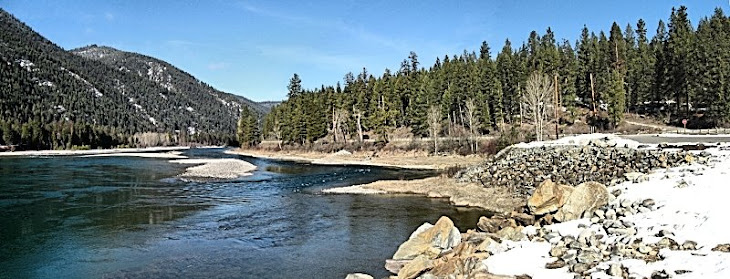
Kootenai River in NW Montana, near Canadian Border

Kootenai River in NW Montana, near Canadian Border
photo by Gene Tunick of Eureka, Montana

Monday, February 20, 2012

Tip O'Day #298 - Look for Your Fairy Godmother

Guest blogger Holly Robinson finishes her three-part series on publicity for both traditionally published authors and Indies.

Befriend Book Bloggers. Book bloggers are our “fairy godmothers,” as my friend Terri Giuliano Long, a best-selling indie author, pointed out in one of her blogs recently. Without their support and generosity, many of our books would never be read. Check out as many book blogs as you can find. When you discover a book blogger who reviews books like yours, write a personal note and ask if you can send a review copy. You might want to send her an e-book because it's cheaper than mailing a paperback, but if she says she'd rather have a paperback, send it! Media mail is cheap postage and print-on-demand paperbacks are inexpensive, too. Remember: she is the one doing you a favor, and it's a good investment. Most book bloggers post reviews on Amazon and Goodreads; once they're up, be sure to tweet and post those links on your own pages. Add them to your Amazon Author Central page as well.

Look for Out-of-the-Box Marketing Opportunities. Just like parents know their own children better than anyone else can, you know your book: its content, style, and target audience. Use that expertise in thinking about out-of-the-box marketing opportunities. I contacted pet groups when I published The Gerbil Farmer's Daughter, for instance, and found a loyal following. For Sleeping Tigers, I'm contacting breast cancer groups, because my main character is a breast cancer survivor, and I know other cancer survivors will connect with this story about hope and starting over.

Lasting Impressions. All of your marketing efforts will eventually come together. If you're a parent, think about how many times you had to show your toddler peas or carrots before that child stopped thinking of veggies as too weird to eat. The same is true of your book: keep putting it out there, and pretty soon people will start saying, “Hey, I remember that title. I meant to read that book!”

Learn more about Holly at her website.

Sunday, February 19, 2012

Tip O'Day #297 - An Author's Advocate

Guest blogger Holly Robinson on publicists, book launches and giveaways.

If you're traditionally published, expect to be assigned a publicist. It is that person's job to advocate for your book with print media, radio and television stations, bookstores, and online sites. Make yourself part of the publicity team. If the publicist suggests that you do something, do it! The more you help your publicist, the more she can help you. On the other hand, don't take it personally if the publicist is too busy to do more than a few early rounds of marketing pushes. She'll probably have a minimum of time and an even smaller budget to devote to your book. You'll have to keep up the momentum. Likewise, if you're an indie author, be prepared to devote part of every week to promoting your books. Writers with deep pockets may find it easiest to hire a publicist; even then, log the hours if you want results.

Your Book Launch Is What You Make It. Long, long ago in a galaxy far, far away, a book launch in traditional publishing was a Very Big Deal. Authors were sent on book tours to do readings and signings on the publisher's dime. The pre-sales of books, both online and in bookstores, determined pretty quickly which books were hits. That's because they knew that shelf life in bookstores was brief. This is all changing. Sure, it's great to gain traction the minute your book is available. However, with the advent of online book sellers and e-books, your book will stay around forever. Don't despair if it takes weeks, or even months, to see sales results. Keep at it, and eventually the numbers will climb.

Give Away Your Books. Traditional publishers know that the best way to sell a book is to give it away first. They target who they give it to, of course—book reviewers, TV producers, book clubs—but, ultimately, the idea is to “seed” your book around the country so that people start talking about it. You can do the same thing on your own. Participate in giveaways on your own facebook author page or through Goodreads, or ask book bloggers if they'll host giveaways for you.

Holly is the author of the novel Sleeping Tigers and The Gerbil Farmer's Daughter: A Memoir. Check her out at her website. She will return tomorrow with three more publicity ideas for both Indies and traditionally published authors.

Saturday, February 18, 2012

Tip O'Day #296 - Publicity, Indie vs Legacy

Guest blogger Holly Robinson on “The Good, the Bad and the Mysterious about Your Publicity Campaign.”

Now that I've got feet in both camps, I have a unique perspective on the good, the bad and the mysterious truths about book marketing. My memoir, The Gerbil Farmer's Daughter, was published by Random House. I leaped into the indie world when I self-published my first novel, Sleeping Tigers, a couple of months ago. My second novel, The Wishing Hill, will be published by Penguin in spring 2013. These experiences have taught me a lot about book publicity, but I'm still learning new things every day. There are some differences in how traditional and indie books are publicized, but those differences are shrinking by the nanosecond. The truest thing I can tell you is that, no matter how your book makes it into the world, you'll need to take an active part in the publicity. Here are a few tips to get you started.

Mine the Free Resources. The Internet is a wonderful tutor. There are more free resources out there about marketing your book than you'll ever have time to read. Google anything from “picking a book cover” to “social media for authors,” and you'll get enough hits to last through a few thermoses of coffee. Make good use of these resources. Two of my favorites are Novel Publicity's “Free Advice Blog” and CreateSpace's “Free Publishing Resources.”

Prepare Your Platform. No matter who you talk to in publishing — agent, editor, publicist, or sales team — they'll tell you that their ideal is a good book written by an author with a “solid platform.” Basically, that means that they want you to be famous before you even give them a manuscript — or they want some hook, like you chewed off your arm during a battle with a grizzly bear. (Even then, they hope you've been blogging about it.) One easy way to start building your platform is by crafting a virtual identity. Social media tools are free and easy to use. Start a blog, create an author Facebook page, get a Twitter account, and set up a Goodreads page. Give people useful information — don't just pimp your book. If you know how to do something — anything from fly fishing to quilting — blog about that, guest post on other people's blogs, and people will start following you. Yes, it's time consuming, but it's also incredibly fun to connect with people. If you're trying traditional publishing avenues, it will help your editor sell your book to the publisher if she can prove that you have an active presence online. Indie or traditional, you're cultivating a loyal readership.

Learn more about Holly at her website. Tomorrow, she returns with comments on book launches and giveaways.

Friday, February 17, 2012

Tip O'Day #295 - Plotter or Pantser?

Guest blogger Jeannine McAllister on Pantsers vs Plotters.

Not long ago, a colleague wrote about how lost she was in her story. I asked her if she was a pantser or a plotter. She said she was a pantser.

Pantsers are writers who sit down and create a story by the ‘seat of their pants.’ They can write linearly from beginning to end, figuring things out along the way. Being able to write whatever comes to mind without any guide is a skill. They construct the book in their mind and just type. The problem with pantsers is they generally spend a lot of time in editing after the first draft. Also, it is not unusual for them to loss their path along the way to the end of the book because there is no road map.

Plotters plan the book from beginning to the end before they start writing. It is said that prior to computers most writing was done in chunks. Plotting allows you to work non-linear in chunks. Plotters need for how much planning they do varies; from a hand written note on a napkin, to a notebook full of handwritten scenes, to a thirty to fifty, maybe a hundred, page typed outline. Generally, they know something about each chapter, sometimes each scene, before they start writing. Plus, they have done character and location sketches. Plotters may spend three or more months up to years developing their plot outline. That’s a problem with plotters. They can spend so much time plotting, getting every detail perfect, that it ends up never getting finished, or they end up with enough material for a ten volume series before they start writing.

While plotters spend a lot of time before they actually start writing, the advance time often decreases the time they spend editing in the end. Pantsers don’t spend much time, if any, in the beginning; they spend it at the end editing.

If I sound biased towards plotting it’s because I hate editing, but I’m also envious of pantsers.

For further reading, check this out.
Dixon says: I like Jeannine's analysis of the difference between planners and pantsers. However, I suspect that the majority of writers are found somewhere between those two extremes. I'm sure there are very few writers who sit down without an idea what they're going to create. For an extreme planner, I'm reminded of Margaret Mitchell, who plotted out Gone With The Wind to the smallest detail. Then, first of all, she wrote the last chapter. Many writers do that, to make sure they'll have a satisfying conclusion. Then Ms Mitchell wrote the next to last chapter. And then the one before that. And the chapter before that. She wrote the entire saga backwards. Now that's a dedicated planner.
In my novels, I have a very good idea of what will happen in the first 3-4 chapters, and a vague concept of how my story will end. Then I "write in the headlights." With each page that I write, I can see a bit further up the road. When I wrote The Assassins Club, I had a moment of clarity about two-thirds of the way through, when I could see exactly how the final two chapters would be choreographed. The final version of those pages varied little from that original vision. Thank you, Voices In My Head.

Thursday, February 16, 2012

Tip O'Day #294 - Living in 2 Worlds

What Facebook means to guest blogger Jo Marshall.

What I like most about Facebook is the opportunity it offers to become involved instantly in causes such as donating books to at-risk students, or signing petitions. I try to avoid politics because my pages represent the Twig Stories series and its underlying message of care for our natural world. My royalties are donated to nonprofits so my Facebook pages are not about me as an author. They are meant to be a reflection of the theme of the Twig world - climate change, endangered wildlife, shrinking glaciers, and adaptation to a warming world. These are important themes, and I am privileged to represent them via Twig Stories.

So I'm excited to use Facebook and proud I've figured out how, since I'm no longer young. Learning new tech skills becomes more painful every day. I'm very, very interested in all my fascinating Facebook friends! Their world is much more expansive, entertaining, and educational than mine. What I love most about all of them is that they are happy, busy, and encouraging! I'm learning so much about them, and from them.

Perhaps all of this has been said by others before, but I hope the goodwill extended to others in the Facebook community is carried by them into the 'real' world. I think their tolerance and cheerfulness shown here on these pages might make a difference in how we interact with one another elsewhere...or not.

But it has made a difference for me. Now I have this wonderful, meaningful and educational place I can come to everyday, and know one of my Facebook friends will always make me laugh.

Learn more about Jo Marshall at Twig Stories.

Wednesday, February 15, 2012

Tip O'Day #293 - Bad Covers Kill Good Books

Tom Isbell, author of Southern Cross, on book covers.

Cover design is important for pBooks as well as eBooks, but for slightly different reasons. Customers in a bookstore will be drawn to your book based on its front cover (or spine, depending how the book is displayed). They will read the back cover and maybe turn to the first chapter, all in a matter of seconds. That’s all the time you have to hook them.

Before deciding on the basic design for your cover (whether you do it or have it done professionally), take time to go to a local bookstore and look at the covers of books in your genre. The major publishing houses have spent a lot of money determining what cover designs sell books. It’s free advice, so take it.

The cover for an eBook is almost more important than one for a pBook; in most cases, the potential customer only sees a postage stamp sized picture of your wonderful cover. Keep it simple. Fancy fonts may not be legible when reduced and the cover art may end up looking like a dark blob. Play with ideas and reduce them to thumbnail size to see if they look good. Ask your critique group or other writing friends to evaluate your cover.

Check out Tom at his website or on Facebook.
Dixon says: I was fortunate to work with a professional, Suzanne Fyhrie Parrott of Unruly Guides, on my first published novel. After discussing The Assassins Club with me, she came up with 4-5 draft concepts. With my permission, they were posted on Facebook, enabling other authors and publishing pros to weigh in with their opinions. Their input gave me confidence that the eventual final cover was, in fact, the most effective choice.

Tuesday, February 14, 2012

Tip O'Day #292 - Setting & Theme

The two previous blog posts have talked about the importance of setting, and the possibility it can actually become a character in your story - think The Perfect Storm. Another consideration is the use of setting to reinforce the mood and themes of your story. There’s a reason few noir scenes are set on sunny California beaches. The following is the third excerpt from my forthcoming thriller, Montana is Burning, which will be out in Kindle this summer.

The golden eagle sliced through the air, miles from where scattered rain drenched a small clearing and the stream that ran through it. She spiraled upward with little effort, riding a thermal current as she waited for the storm to break up.

The eagle was the perfect aerial predator, with cruel talons and a beak that could disembowel an adult sheep. She was death from the sky. Lacking an owl’s night vision, she couldn’t hunt after dark, even though high winds had kept her pinned to her aerie for more than a week and starvation threatened.

She circled and watched. In a valley far below, dry lightning struck a large snag and it burst into flames. Since no animals fled from the fire, the eagle quickly lost interest. She flew on.

The isolated storm finished venting its fury on the clearing and sped east. Dim memories drew the eagle above a stream where salmon returned each summer’s end and trout grew fat and pink on the helpless spawn – ancestral memories of hunts and feasts by eagles long dead but memories no less real. The raptor smelled blood and tasted flesh as if the kills had been her own.

The great bird spotted the glitter of whitewater skittering across rocks made smooth by eons of glacial runoff, and saw dark shapes carving their way beneath the surface.

She dipped a chocolate-brown wing and dropped below the air current. The eagle descended slowly at first, then folded her wings next to her body to plunge like lightning drawn to earth. Her freefall lasted hundreds of feet before she spread wide her wings, pulling out of the meteoric dive. With hardly an eddy on the water’s surface, she ripped a trout from the icy stream and started back to her craggy perch, blood on her talons and savagery in her cry.

As she climbed through the warm air, the golden eagle spotted the valley where lightning struck a snag earlier. Flames burned greedily and jumped to neighboring scrub pine. Only the eagle saw.

In the great bird’s wake, a wolf erupted into the opening and sprang across the stream, but the whitetail he had been stalking already bounded far down the slope, startled by the exultant screech from above. Stopping at the edge of the clearing, the wolf listened to the doe’s flight.

The wolf turned from the fading sound of escape. He jogged toward remembered cattle.

The world, after all, was full of prey.