Kootenai River in NW Montana, near Canadian Border

Kootenai River in NW Montana, near Canadian Border
photo by Gene Tunick of Eureka, Montana
Showing posts with label setting. Show all posts

Tuesday, March 5, 2013

Tip O'Day #427 - Fictional (?) Characters

Guest blogger Carolyn Wall on “Characters – Real and Not.”

Constantly, I am set-upon by fictional characters. It was a pure wonder I didn’t go into acting. As a writer, however, I can create my own folks. In the case of my second novel, Playing With Matches, I began with Harry. I have four kids of my own, and five grandchildren plus three, so I knew how devastated his mom, Clea, was when Harry stopped talking. And how she and Thomas fell in love, once-and-forever, with little Maria-Luz. In the book, Luz looks like my own beautiful teenaged granddaughter.

Other than working through characters -- their love, sex and family problems -- my favorite part of the writing of Matches was the setting, especially a block of scenes that I had to omit from the final copy.

I love Belize City, which is just as Clea describes it in the book – the fish market in the canal, children playing in ditch water, the ocean lapping at the ends of the streets. For Sale by Red Carpet signs fronting shanties. Staircases that lead nowhere. Lush lawns of government buildings, the mayor’s brick house along the highway. City Park where the grass is dead and the trees stripped of leaves, weedy Mortuary Lane, parlors promising fast funerals because of the heat, women sitting alone in upstairs windows.

Speaking of setting -- my apologies to the people of Lousiana for snatching up their False River – actually a lake – and plunking it down in Mississippi.

Clea loved teaching the incarcerated to write, just as I did. For several years, I exhausted some friends and worried others as I prattled on and on about how incredibly much offenders had to say.

Which brings me back to characters.

I was attending a conference recently when the speaker asked a roomful of writers to jot down a childhood memory. I remembered my mother calling me in from outside – I was eleven or twelve – to teach me about the birds and the bees. She told me young ladies carried a handkerchief at all times and said – “Here, read this book.” In Matches, as I wrote the character of Bitsy, my heart ached for her lack of knowing, so I gave her the soft pink memory of Felicia to hold onto.

Carolyn’s latest book, Playing With Matches (Random House, 2012) and her first novel, Sweeping Up Glass (Random House, 2009) are available in bookstores everywhere. You can learn more about her on Facebook or at www.Carolyndwall.com.

Monday, October 29, 2012

Tip O'Day #407 - Settings

Guest blogger Jack Sakalauskas says he’s “not too old for dreams to come true.”

I was born and brought up on Cape Breton Island, Nova Scotia. My best earliest memories were going to the library each Saturday morning to get my books for the week. Pirates, boy detectives - it didn't matter, as long as I could visit someone else's world.

At this time, I did fantasize about being a writer. I wanted to write cowboy stories. For me, the perfect job would be to live in Arizona and write westerns. Well, at least I've gotten to visit Arizona. My career was the military and James Michener one of my favourite authors.

My reading took a sudden halt in 1972 when my daughter was born with C.P. Everything went on the back burner. Medical bills for special hospitals in the U.S. had me working part-time jobs, four at one point, besides my military career. My daughter will be forty next month. Bed-ridden, she requires constant care.

I didn't start reading again until my final retirement in 2004. My first book was Salt: A World History. Then, it was one book after another. For me, as well as most writers, the Internet certainly changed things. It became easy for anyone to write something and put it out there. So I jumped in. I thought it would keep me out of mischief and maybe keep Alzheimers at bay.

I wrote some short stories and it was fun. Some are on Echelon Press. By now, I wanted a book in print. I had no delusions I would ever get a publisher. Along came CreateSpace. Perfect for me. But what to write about? Write what you know about, everyone says. Well, I had spent time in Morocco. I knew about their trains, riding camels, deserts and the Kazbah. That would do.

My first book, Jewel of Marrakesh, is a YA novel, about a spoiled princess, two English boys, along with a flying carpet, slave traders and magic. I must admit, there is nothing like having a book with your name on the cover sitting on your bookshelf.

Next, I tried my hand at a book for adults. I settled on my home town of Sydney Mines. Lots of coal miners and some bootleggers, but basically boring, as I suspect most towns are. So I changed the town name to Li'l Warsaw and titled my book, Moonshine or Dirty Faces.

For the most part the places are real and also most of the people. Of course, everything is exaggerated. How else can you make a story?

You can learn more about this author’s books at http://tinyurl.com/8heos4e .

Saturday, March 17, 2012

Tip O'Day #317 - Writing is Personal

Guest blogger Malika Gandhi on Life Writing.

You may have heard that writing is a personal thing. It truly is. People write for different reasons - for recognition perhaps, out of passion, or it could just be their job. It begins with a thought, maybe written within the pages of a diary, and a “why not?” The creative energy flows when you write something you feel strongly about. Emotions come into play - anger, sadness, happiness. The pen and paper become your friends.

Writing is about seeing. It’s about noticing what happens around you. Just walking down the street and watching what goes on around you will bring ideas. We live in a fascinating world and there is never enough to write about, but the hard part is what to write? What makes people want to stop browsing and start reading? Research is the answer, and then to go by that trend.

But this is not always necessary. If you simply want to express yourself, then there is no stopping you. Just blog. In your own site, you can put down anything that fascinates you. You can talk about photography, your life, your hobbies...the list is endless.

I began to write when I was in junior school and I was told to write book reviews in a log book. I was an avid reader and still am. I loved reviewing books by my favourite authors, C.S.Lewis and Roald Dahl. Sometimes I got carried away and filled two or more pages than was necessary! As I grew older, I moved on to writing diaries. Years later, I began to write my novel and as all authors, established or not, I had to overcome many hurdles. I attended writing courses, read many articles, and subscribed to writing magazines to get where I am now.

I still have a lot more to learn but being self-published, opened me up to the world of blogging. The site is based on my novel Freedom of the Monsoon. Also, I have the chance to showcase other works. I can talk about my personal life, my art, and my culture. Each time I post something, I feel I have achieved and so will you. It is a personal satisfaction.
Learn more about Malika at her blog.
Dixon says: Malika, I like your book title - very lyrical. One thing I disagree with is following trends. At the moment, gay, conflicted werewolves may be all the rage, but in the 2-3 years it takes to write, edit and publish your book, the public will have suffered through a deluge of stories about gay, conflicted werewolves and will not embrace another one. I believe the 'trick' is to figure out what universal themes make people flock to Harry Potter, James Bond, Hunger Games, The Girl with the Dragon Tattoo, and so on. Then find ways to express those themes through your own original characters, plot and settings.

Friday, March 9, 2012

Tip O'Day #313 - Realistic Military Thrillers

Guest blogger Harvey Black on visiting actual settings.
Many action-adventure books have been written about World War II, but not so many by writers from one of the Allied countries from the point-of-view of German soldiers. Harvey Black has written three novels about Fallschirmjäger – a German word for ‘parachute hunter,’ the name given to their paratroopers. His first thriller, Devils with Wings - The Green Devils Assault on Fort Eben Emael, was released in the summer of 2011, and Devils with Wings: Silk Drop came out in early 2012.

I have wanted to write a novel since I was a teenager. Enthralled by Tolkien’s Lord of the Rings, E.E. Doc Smith’s Lensmen series and Edgar Rice Burroughs, I felt sure my first would be of the fantasy or science fiction genre.

Joining the army changed all of that and my new passion became military history. Devils with Wings - The Green Devils Assault on Fort Eben Emael, was based on the adventures of two young Fallschirmjäger paratroopers during the early part of World War II, climaxing with the assault on a supposedly impregnable Belgian fortress.

For both books, I visited the locations in person. For Devils with Wings: Silk Drop, I walked the routes in Crete where my characters would have marched, up to 18 miles. Most of the descriptions in the novels were written in situ, looking at the terrain as the actual combatants would have viewed it. For my third novel, I shall also visit Leningrad and the River Neva in the near future, to ensure that realism is maintained.

To learn more about this author, visit his Amazon.com author’s page.

Monday, March 5, 2012

Tip O'Day #310 - More on Setting

Guest blogger Jonnie Comet returns with some thoughts on yesterday’s ‘setting’ post.
Hemingway once said, about writing in a given setting, ‘Don't forget the weather.’ Details about setting can be vital to a story's appeal but there are pitfalls to having too much detail as well.

I tend to write with a firm idea of the locale of the story. First, I like to choose places I would like to live in, possibly because I do not find many good works of fiction set in such places. I never write about NYC, Miami or LA, for example. There is not much fiction set on sailboats or in the lesser-visited Caribbean islands, so Deirdre, the Wanderer is focused on these settings.

In other cases I will invent geography (more recently relying on Google Earth for ideas) and otherwise using the story itself as what determines what the place has to look like. Whilst not a science-fiction writer, nor a fantasy writer like Tolkien, I nonetheless have devised whole worlds for the telling of a tale. One series (bits of which are on Kindle) takes place in a fictitious British possession in the eastern Pacific -- bearing a passing similarity to the British Virgin Islands -- for which I have composed a source book of documents, maps, history, weather patterns, cultural identity, bus routes, rosters of businesses, and so on. When writing a new chapter, I already have a known 'reality.' It works just the same as if I were writing about a real-life place.

The central-Connecticut 'River Valley' setting of my Love Me Do is another case. Ostensibly it is set in the vicinity of Middletown, but Middletown does not exist in the story's reality (though other real places do). The township of Wilshire is too big to be Middletown and I can't claim that roads and streets mentioned have any real-life corollaries. Wilshire thus stands as an alternative reality of Connecticut in the 1970s, not unlike what creative re-enactors and model-railway hobbyists concoct. I confess I borrowed this device from Fitzgerald's setting of The Eggs in The Great Gatsby. The setting is finite, must exist in a specific area and yet does not depict 'true' reality. This leads to a certain surrealism which, I believe, is part and parcel of a story's theme and of the whole reading experience.

Fanciful settings do have their limitations, especially when they must dovetail with actual ones. We have all seen Pocahontas flying over the 50-foot waterfall in a Disney film, but such a waterfall does not occur anywhere along the eastern US coast. Did Disney really believe anyone who had been to Busch Gardens and Williamsburg wouldn't know that? Such stretches of credibility can detract from the audience's experience.

Setting details should support but not overwhelm the story. Too often a writer will try to keep too close to real-life setting (or, worse, biography) and may include so many details the story itself seems secondary. Even the Gothic writers of the late 1700s were more apt to invent scenery than to write from experience. In addition there is always the possibility of misrepresenting something an astute reader will notice. Agatha Christie related an anecdote, soon after publishing a Poirot mystery in which she had a man meet someone at the corner of two streets in Paris. A reader wrote that, 'Mrs. Christie, those streets do not meet. They are parallel all through the city.' Oops.

One way to avoid error is to simply be less precise. My rule is 'If you don't know, don't say.' To represent a TV studio in Manhattan, don't give the address or the directions or even the time it takes to cross the town to get there. Anyone could case 53rd Street and discover the building you describe does not exist. Just say it's 'in the Fifties'. That's close enough. It's believable, establishes location, and moves your story on to the real action.

Whilst strong, credible and well-described setting is an asset -- perhaps even a requirement -- for any story, slavish adherence to reality can actually be detrimental to the story's purpose. Keep in mind that a story should include some action, character development and a memorable, relevant theme. Setting is only one vehicle to enable those elements.

Sunday, March 4, 2012

Tip O'Day #309 - Where to Set a Story?

Guest blogger Graham Smith on choosing settings.

How do writers choose a location or a setting for their stories? There are lots of different answers to this question, so all I can do is relate my own experiences and choices. My own take on this is somewhat varied as I use real, fictional and amorphous locations for my stories.

First, there is the novel I’m writing which is set in my neighbouring county. I purposely chose to set my novel in Cumbria and The Lake District because I am familiar with the county and the dialect of the locals and I have an understanding of local issues and the mindset of the populace.

Another deciding factor is a purely lazy one. Cumbria is on my doorstep and if I need to research something then I know I can jump into the car and within a couple of hours I’m exactly where I want my characters to be. All I have to do then is look around and make a few notes. If I want to get a feel for local news there is always a paper I can buy at a newsagents. Or I can head into a café or bar for a leisurely lunch and do some industrial level eavesdropping to pick up local dialects and speech patterns.

Second, there is my first collection of short stories, Eleven the Hardest Way, which has nine of the eleven different stories taking place in un-named locations. There is no reason for this other than the fact that a precise location was not important to the story. Take Shooting Stars - where an assassin lies in wait at a movie premiere - it doesn’t matter whether the action is in London, Paris, LA or any other major city. What matters is the assassin, the target and the reason for the intended assassination. All other factors contribute but within the realm of the story the location can be anywhere and as such becomes less important. A caveat to this though, is that when choosing a non-specified location the author must still imbue an atmospheric element to the story.

Third, I have another collection of short stories, Harry Charters Chronicles, which I’ve set in a fictional city called Mariscoper. Hands up here, I made a conscious decision to make up a location as when I was writing the stories I was so involved with the writing that I didn’t want to stop and start researching a location. A quick Google map search gave me a few suggestions and then after a spot of renaming I had Mariscoper, a playground for my protagonist I didn’t need to research. I couldn’t possibly get it wrong as there is no such location. This allowed me complete freedom. As I wrote further pieces featuring Harry, Mariscoper evolved to have docks, a major river and neighbouring cities not to mention a college.

Where do you set your stories?

Learn more about Graham at his blog.

Tuesday, February 14, 2012

Tip O'Day #292 - Setting & Theme

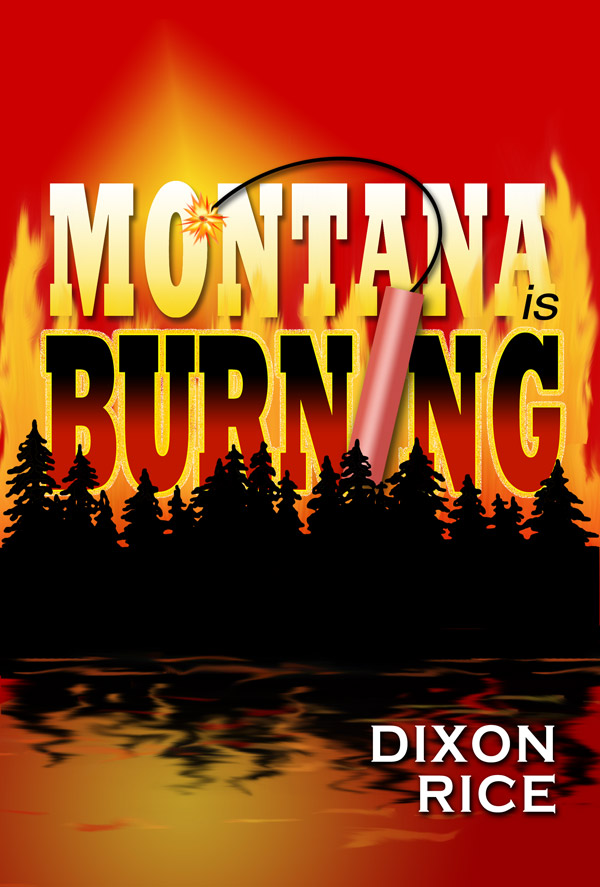
The two previous blog posts have talked about the importance of setting, and the possibility it can actually become a character in your story - think The Perfect Storm. Another consideration is the use of setting to reinforce the mood and themes of your story. There’s a reason few noir scenes are set on sunny California beaches. The following is the third excerpt from my forthcoming thriller, Montana is Burning, which will be out in Kindle this summer.

The golden eagle sliced through the air, miles from where scattered rain drenched a small clearing and the stream that ran through it. She spiraled upward with little effort, riding a thermal current as she waited for the storm to break up.

The eagle was the perfect aerial predator, with cruel talons and a beak that could disembowel an adult sheep. She was death from the sky. Lacking an owl’s night vision, she couldn’t hunt after dark, even though high winds had kept her pinned to her aerie for more than a week and starvation threatened.

She circled and watched. In a valley far below, dry lightning struck a large snag and it burst into flames. Since no animals fled from the fire, the eagle quickly lost interest. She flew on.

The isolated storm finished venting its fury on the clearing and sped east. Dim memories drew the eagle above a stream where salmon returned each summer’s end and trout grew fat and pink on the helpless spawn – ancestral memories of hunts and feasts by eagles long dead but memories no less real. The raptor smelled blood and tasted flesh as if the kills had been her own.

The great bird spotted the glitter of whitewater skittering across rocks made smooth by eons of glacial runoff, and saw dark shapes carving their way beneath the surface.

She dipped a chocolate-brown wing and dropped below the air current. The eagle descended slowly at first, then folded her wings next to her body to plunge like lightning drawn to earth. Her freefall lasted hundreds of feet before she spread wide her wings, pulling out of the meteoric dive. With hardly an eddy on the water’s surface, she ripped a trout from the icy stream and started back to her craggy perch, blood on her talons and savagery in her cry.

As she climbed through the warm air, the golden eagle spotted the valley where lightning struck a snag earlier. Flames burned greedily and jumped to neighboring scrub pine. Only the eagle saw.

In the great bird’s wake, a wolf erupted into the opening and sprang across the stream, but the whitetail he had been stalking already bounded far down the slope, startled by the exultant screech from above. Stopping at the edge of the clearing, the wolf listened to the doe’s flight.

The wolf turned from the fading sound of escape. He jogged toward remembered cattle.

The world, after all, was full of prey.

Monday, February 13, 2012

Tip O'Day #291 - Setting as a Character

Setting can become a character in your story. In my novel Montana is Burning, a forest fire serves as not only backdrop, but also antagonist and instigator of events. In this second part of the novel excerpt, the fire faces death but survives.

The golden eagle circled high over a remote valley twenty miles west of Kintla, Montana.

A burning snag sent a faint column of smoke aloft. The eagle knew fire usually flushes small animals from their hiding places but not this time. A pine beetle infestation had devastated the valley, leaving behind mostly rotten stumps and scarcely any healthy trees. Despite a huge insect population, there were almost no green branches and so hardly any rodents, birds or small game lived there. Above the size of centipedes, practically no life survived in the valley.

The great bird found a sturdy branch high in an ancient pine. She waited.

Like waves rippling out from a pebble dropped in a fiery lake, a circle of flame spread around the snag, painting the pale underbelly of the clouds an angry red. The lower branches of several nearby spruce caught fire. The expanding pool lapped across the matted carpet of pine needles, burning into the forest floor until it ran out of air.

A dark cloud passed overhead, so heavy with water vapor that it began to condense. A shower doused the valley and the eagle sought shelter on a lower branch.

Flames hissed and wavered and then finally failed. As if to signal the fire's defeat, the blackened snag teetered and fell. A cloud of ash rose into the damp air then pelted back to earth with the rain.

The snag lay on its side like some grotesque wounded beast. Sheltered from the rain, its underside reflected a dim glow against the ruined forest floor. The fire lived.

The golden eagle took wing and continued her hunt.

This three-part novel excerpt concludes tomorrow, when wolf and eagle meet one another.

Sunday, February 12, 2012

Tip O'Day #290 - Setting is Crucial

I mostly put up guest posts from other writers because I think we can learn a lot from the success and failures of others, even the least experienced. However, my “Wolf & Eagle” excerpts from the forthcoming thriller Montana is Burning have had the most hits by far over the last few years. For the success of a novel, I believe setting can be just as important as character and story. The following is my attempt to convey a sense of the Montana wilderness.

As shadows lengthened in the forest, a wolf waited.

He awoke at daybreak far to the north with an empty belly. The last surviving member of his pack, he’d eaten nothing but a few rodents the last few days. Alone, he had little hope of killing larger prey.

The wolf turned south and loped toward memories of slow-moving cattle that grazed away from human scents. He stopped to rest when the sun shone directly overhead. A swath of land denuded of trees stretched into the distance to both left and right. He could smell and hear much further than he could see, and sensed no men nearby. He sprinted across. He rested again and then urinated to mark his mission and direction of travel before continuing the journey. The wolf trotted over the Whitefish and Salish Mountains before a familiar scent stopped him on the edge of a grassy meadow.

The cattle still lay in his path but only after many hours’ travel through rolling sand hills. His stomach ached. The wolf ignored his hunger and waited.

Shadows stretched into the clearing below him, masking a swift stream in smears of gray and black. The wolf breathed deep of the warm air and smelled deer.

A female. Closer this time. Down-slope and upwind.

The wolf tensed his haunches in readiness.

The whitetail deer edged closer through the shadows, yet not close enough.

The wolf felt the weather change. A storm front was passing by. The humidity rose as clouds rolled overhead, smothering the landscape in featureless murk. Lightning crackled in the distance.

The lone male might as well have been blind. Yet he smelled the sweet fragrance of tamarack, pine and aspen, the loamy earth, the rich droppings left by beast and bird, and the salty blood coursing through the doe. Even through the noisy turbulence of wind and nearby stream, he clearly heard the prey set one hoof on a leaf.

The wind began to swirl. A fat plop of rain struck the cracked earth between his paws. Water sprinkled across the parched clearing. He sensed dusty treetops shuddering at scattered drops. A blanket of heavy, moist air settled around the hunter and now he sensed only water.

He stretched out on his belly and waited.

This is the first of three posts, to be continued tomorrow. Look for Montana is Burning on Kindle this summer. Suzanne Parrott of Unruly Guides designed the book cover.

Sunday, February 5, 2012

Tip O'Day #284 - "Grab 'Em by the Collar"

Your genial host, novelist Dixon Rice, tries his hand at writing a blurb.

Joanna Penn recently blogged about what makes an effective book blurb in The Creative Penn. It needs to be brief, no more than 100-150 words. If space allows, you may want to make some about the author remarks, but be sure to include:

(1) A hint of the plot.
(2) Use of words that evoke images and resonate with readers of the genre.
(3) Main characters named and characterized.
(4) Idea of setting.
(5) A question or a hint of mystery that draws the reader in.
(6) Some hyperbole.
(7) Finally, quotes about the book or previous books by the author.

I like Joanna’s analysis. A blurb should be some of your best writing, not feeling like a book report. It should briefly convey a sense of the plot, setting, main characters and themes. A blurb needs to grab readers by the collar, getting them to look at the opening page (or click on the online sample pages) to see if the writing lives up to the hype. Following is my 150-word attempt to apply this concept to my novel, The Assassins Club.

Deputy Marconi spoke softly. “We know you’ve been killing people, Ty…”

Deputy Trueblood pushed his partner aside. “The point is, we want in.”

Ty blinked. “Excuse me?”

In Montana’s Rocky Mountains in the 1970s, college student Tyler Goode figures he “accidentally” became a serial killer.

Another serial killer, a bearded, thirtyish man, emerges nude from the ocean in Baja California. He thinks he is Jesus. He walks up the coast, killing when it pleases him, and gathers a Manson-like tribe of losers.

Ty and Jesus eventually collide in this fast-paced suspense-thriller, but only one will survive to pursue his addiction.

See why reviewers say: “…so fast moving, you don't stop to think how it's all going to end. But even if you did, it will still be a surprise.”

“So real you can taste it.”

“An engrossing read with a compelling plot... This novel will keep you guessing until the end.”

So what do you think - did I grab you by the collar?