Kootenai River in NW Montana, near Canadian Border

Kootenai River in NW Montana, near Canadian Border
photo by Gene Tunick of Eureka, Montana

Saturday, March 17, 2012

Tip O'Day #317 - Writing is Personal

Guest blogger Malika Gandhi on Life Writing.

You may have heard that writing is a personal thing. It truly is. People write for different reasons - for recognition perhaps, out of passion, or it could just be their job. It begins with a thought, maybe written within the pages of a diary, and a “why not?” The creative energy flows when you write something you feel strongly about. Emotions come into play - anger, sadness, happiness. The pen and paper become your friends.

Writing is about seeing. It’s about noticing what happens around you. Just walking down the street and watching what goes on around you will bring ideas. We live in a fascinating world and there is never enough to write about, but the hard part is what to write? What makes people want to stop browsing and start reading? Research is the answer, and then to go by that trend.

But this is not always necessary. If you simply want to express yourself, then there is no stopping you. Just blog. In your own site, you can put down anything that fascinates you. You can talk about photography, your life, your hobbies...the list is endless.

I began to write when I was in junior school and I was told to write book reviews in a log book. I was an avid reader and still am. I loved reviewing books by my favourite authors, C.S.Lewis and Roald Dahl. Sometimes I got carried away and filled two or more pages than was necessary! As I grew older, I moved on to writing diaries. Years later, I began to write my novel and as all authors, established or not, I had to overcome many hurdles. I attended writing courses, read many articles, and subscribed to writing magazines to get where I am now.

I still have a lot more to learn but being self-published, opened me up to the world of blogging. The site is based on my novel Freedom of the Monsoon. Also, I have the chance to showcase other works. I can talk about my personal life, my art, and my culture. Each time I post something, I feel I have achieved and so will you. It is a personal satisfaction.
Learn more about Malika at her blog.
Dixon says: Malika, I like your book title - very lyrical. One thing I disagree with is following trends. At the moment, gay, conflicted werewolves may be all the rage, but in the 2-3 years it takes to write, edit and publish your book, the public will have suffered through a deluge of stories about gay, conflicted werewolves and will not embrace another one. I believe the 'trick' is to figure out what universal themes make people flock to Harry Potter, James Bond, Hunger Games, The Girl with the Dragon Tattoo, and so on. Then find ways to express those themes through your own original characters, plot and settings.

Tuesday, March 13, 2012

Tip O'Day #316 - Readin' & 'Ritin'

Guest blogger Blake Stevens on reading to become a better writer.

I am a prolific reader and I read to learn. I love reading great books on leadership, business history, wine, cooking, philosophy, theology, church history and a number of other topics. I also enjoy reading non-fiction detective and spy novels, and other forms of 'brain candy.' Until recently, the main purpose of my reading was to consume as much content as I could.

Occasionally, the style of writing would get in the way and inhibit my ability and even my desire to finish a book. Poor structuring of the content, poor grammatical phrasing, and overuse of complex, compounded sentences made reading tiring. Sometimes, poor writing could even be disruptive to my reading and 'stop me in my tracks.' When this occurred, I noticed it because it was forced upon me. At the time, I was not reading with the view to determine the degree of readability.

I have read the entire Bible in both the King James format and the NIV format. I find the King James version easy enough to read, but noticed when switching in between versions that I would read the NIV version about 25% faster than the King James version, and I was more tired after reading the King James version. The readability is just not as good as with the NIV version. Both are well written but the King James version has a tougher style and the reading process less fluid.

Since starting to write my first book, I have read five books and have been noticing and reviewing the different writing styles of each book. I am taking the time to figure out what makes one book easier to read than another one. I am also reviewing the style and ease of reading earlier and later works from the same author. In most cases, all authors have improved the readability of their books over time.

I have found several things that stand out to make one book easier to read and enjoy than another, including:

• Simpler, less compounded sentence structure
• Clarity of pronouns and removing ambiguous pronouns
• Less formal, more personal 'talking' style
• Consistent and progressive use of tense
• Some use of humor

I am sure there are a lot of other factors at play that make a book more readable, but these are things I have noticed which I have been trying to improve upon in my book. At first, I thought reviewing the writing style of a book would take away from the pure enjoyment of reading it, but have found quite the opposite. I am enjoying this new dimension to reading and it is also now helping my writing.

Dixon says: By the way, I've working with 11 other crime and thriller writers on a readers event called SHAMROCKS-N-SIRENS, and it runs through March 17th. Today, March 13th, I happen to be the featured author. You can find a YouTube clip about the event here. Interviews about me and my thriller THE ASSASSINS CLUB can be found on various blogs, including those of Stella Deleuze and Pat Bertram.

Monday, March 12, 2012

Tip O'Day #315 - Free Book Promos

Guest blogger Diane Rapp on “What to Expect During a FREE Book Promotion.”

I became an Indie author in August of 2011 and started uploading my four novels to the Amazon and Barnes & Noble websites. In “real life” I sold real estate, wrote ad copy, and owned a small retail business. I never marketed myself, so Twitter and Facebook seemed like a foreign countries with languages of their own.

My daughter designed a website, and I started promoting my work. Six months later I read about authors’ success with Amazon’s Kindle Select, so I dropped Barnes & Noble (very few sales anyway) and signed up on the program.

Should I schedule free book days? With two different series, I could offer the first book in each to promote the series, but shouldn’t I wait until I had more titles to offer? Evidently free days do a lot for a single book. When a book moves up the free list “also boughts” kick in (the message that says “customers who bought this book also bought—insert your title”). I decided to offer two books for free in February. A friend directed me to a fantastic article by Karen Barney “Maximizing Free Days on Kindle Select." I had a game plan. In addition I joined tweet groups to spread the word to more readers. I suggest joining the tweet team at Women’s Literary Café and shorten links to your book at www.bitly.com.

Let’s get to the numbers. With Howl of the Wolf I gave away 4390 e-books in two days. After two weeks I’ve sold 177 books plus 13 borrows. During the same period, my friend Tina Boscha gave away River in the Sea. She reports 13,650 free downloads and sold 306 books plus 70 borrows. Therefore the more free books downloaded equals more sales. Both of us increased our sales from previous months.

The following week I offered Murder Caribbean-Style free and gave away 5225 e-books. The title reached #6 on the Free Mystery list. After two free promotions, all four of my books are selling, including the #2 in each series.

What should authors expect AFTER a free promotion?

(1) There will be dead time without sales that can be unnerving. Don’t look! Mark down the number of free books downloaded (so you can do the math later), and ignore your statistics for at least 24 hours. Don’t peek!
(2) After that sales should begin, along with some returns. Don’t let returns phase you. After free days people click without checking and return the book when they get charged.
(3) In the next week “also boughts” kick in and people browse your title. About that time, your sales rank gets higher, peaking 4 or 5 days later.
(4) Two weeks after free days, you may have several hundred sales. Regardless of how many you gain immediately, you received valuable exposure as an author!

Trying to navigate the strange world of Indie publishing and self-promotion can be daunting. If anyone has more questions, contact me through QuickSilver Novels website or on Twitter @DianeRapp.

Sunday, March 11, 2012

Tip O'Day #314 - She's Got Niggles

Guest blogger Dawn Torrens on indie pricing.

Life is full of niggles. In the publishing world, I have one specific niggle. As an indie author I feel self-published authors are pricing their hard work and lovingly written books far too low. I personally feel that 99c or 99p should be reserved for short term promotions. This ludicrous low pricing of indie books is under-valuing our work. If someone wants to buy your book after reading the synopsis, they will whether it’s priced at 99p or £2.99 - which is still a great price.

I have had this discussion with many people. They all agreed on one thing; if they want a book, they will buy it. They won’t necessarily buy a book just because it’s free or priced very low. I have read many great e-books over the last 12 months that I would have gladly paid more for.

As a writer and avid reader of many genres, I will buy a book based on the concept not the price.

Learn more about Dawn at her website or her FB author page.

Friday, March 9, 2012

Tip O'Day #313 - Realistic Military Thrillers

Guest blogger Harvey Black on visiting actual settings.
Many action-adventure books have been written about World War II, but not so many by writers from one of the Allied countries from the point-of-view of German soldiers. Harvey Black has written three novels about Fallschirmjäger – a German word for ‘parachute hunter,’ the name given to their paratroopers. His first thriller, Devils with Wings - The Green Devils Assault on Fort Eben Emael, was released in the summer of 2011, and Devils with Wings: Silk Drop came out in early 2012.

I have wanted to write a novel since I was a teenager. Enthralled by Tolkien’s Lord of the Rings, E.E. Doc Smith’s Lensmen series and Edgar Rice Burroughs, I felt sure my first would be of the fantasy or science fiction genre.

Joining the army changed all of that and my new passion became military history. Devils with Wings - The Green Devils Assault on Fort Eben Emael, was based on the adventures of two young Fallschirmjäger paratroopers during the early part of World War II, climaxing with the assault on a supposedly impregnable Belgian fortress.

For both books, I visited the locations in person. For Devils with Wings: Silk Drop, I walked the routes in Crete where my characters would have marched, up to 18 miles. Most of the descriptions in the novels were written in situ, looking at the terrain as the actual combatants would have viewed it. For my third novel, I shall also visit Leningrad and the River Neva in the near future, to ensure that realism is maintained.

To learn more about this author, visit his Amazon.com author’s page.

Thursday, March 8, 2012

Tip O'Day #312 - A Book Journey

Guest blogger Jack Scott on “From blog to book, start to finish.”

Within the last fifteen months, I’ve been mad enough to create a blog, design my own personal website and write a book. For most of my meandering expedition, I had absolutely no idea what I was doing. A combination of trial and error, intuition, gentle encouragement from an inspirational publisher and not so gentle cajoling from my partner, have turned an unplanned and uncoordinated series of chess moves into the production of a well-received book that I am proud to have created. My probation has been illuminating - about writing, plot content and construction, network building, promotion and engagement. The list is endless. If you’re thinking of writing a book about your life as I have done, you may find some of these tips useful:

1. Just write - Okay, there are some amazingly talented writers out there. Every word, every sentence and every nuance is described with perfection and beauty. There’s no way you can compete, right? Wrong. All writers have their own style, and most people have ability. It’s a matter of flexing your writing muscles first before finding that creative Nirvana. Just start writing. It doesn’t matter if it’s imperfect. You have to begin somewhere. The more you write, the better you’ll get.

2. Be yourself, be unique - Each of us has our own back story. In theory, this means that we all have the potential to write something unique - and interesting enough to engage readers. Putting that theory into practice is the hard part. Think carefully about what will make your writing stand out from the crowd. How is your message different? What’s distinctive about your angle? Who will your writing appeal to? Writing beautifully about a glorious sunset may well get some admiring comments but won’t necessarily help you rise above the ordinary. Are you prepared to reveal the real you?

3. Think about ‘form’ - This is one of the biggest lessons I learned when turning my blog into a book. A story, even a real-life story, must have order, pace, plot, a compelling blend of highs and lows and a sense of purpose. I created a story-board for my book (much like creating a film script). It changed everything. I instantly saw the gaps and inconsistencies in the storyline, the flabby narrative and superfluous characters. A straight chronological account of your life may not be absorbing enough. Introduce some dramatic tension. Write as if it’s fiction. Get that reader to turn the page.

4. Think visually - Set the scene and describe your characters and situations colourfully. Help your readers visualise your story in their mind’s eye. Use dialogue to break up the narrative and keep the speech realistic. Don’t over-egg the pudding with dense, old-fashioned diction. You’re not writing Pride and Prejudice.

5. Edit, edit, edit and when you’re done, edit again - Be bold and decisive. If something adds little to the plot or message, cut it. Unless you are absolutely confident about your writing skills, re-examine long, flowery sentences and make sure the reader doesn’t get lost in the prose. I made an early decision to keep my book extremely tight and fast-moving. That involved some painful and dramatic pruning.

6. Share your writing - Sharing something you’ve just written is a brave thing to do. If you’re a new writer, as I was, it’s the only way of getting a real feel for how you are doing and how your written style will be perceived by others. You can start gently by asking those close to you for an opinion, though a critique from somebody completely independent is, in my view, more useful. Ask for feedback. Then take a deep breath. Take the comments on board. Some of them will be rubbish but some of them won’t. Try not to take things personally and never spit back.

7. Start a Blog - Blogging is a great auditioning process for writing, and the best way to experiment and grow your fan-base. There are many blogging platforms out there (Wordpress, Google, Wordpad, etc) and most are easy to set up and use - providing a range of professionally designed templates to select from. For a small consideration, these applications will also set up your own domain name linked to your blog. I use Wordpress.com linked to my own domain.

In the crowded blogosphere, content is king and the best content is fresh, new and frequently updated. My blog became popular because I wrote little and often around a small number of specific themes that quickly found an audience. Break up your words with interesting and relevant images. Keep your blog clean and uncluttered. Fussy, multi-coloured fonts and busy designs can hurt the eyes and discourage the reader from continuing.

8. Think about Search Engine Optimisation - Don’t be spooked by this. Search engine optimisation (SEO) is just how a page is ranked on search engines and by this I mostly mean Google. If your blog doesn’t appear in the first few pages of Google then you might as well not be on the internet at all. There are many companies that claim they will increase your ranking for a fee. Don’t waste your money. Follow these few steps and you’ll soon by up there with the pros:

• Publish a post at least once a week
• Engage with your blogging peers with comments and guest posts
• Add share buttons to your posts so your readers can spread the word
• Create reciprocal links by listing other similar blogs on your blog
• Join blog directories. Most are free and some specialise (women bloggers, ex-pat bloggers, for example).

9. Get Yourself Interviewed - Online interviews are a great way to increase your profile. For instance, many ex-pat sites are always looking for interesting people to interview. It provides them with content and you with exposure.

10. Exploit Social Networks and Forums to Grow Exposure - Join social networks and make friends. Facebook and Twitter are the most popular and influential. Create a Facebook page for your blog (and for your book when your masterpiece is done and dusted). Autopost your blog posts to both Facebook and Twitter so you don’t have to add them manually. Again, this really helps with SEO.

If forums exist for your area of interest, join them and participate meaningfully. Engage gently and be careful not to over-promote. People will catch you out.

11. Create a Personal website - Your work of genius is written but unless you want to be stuck with a box full of books propping open a door or languishing unloved and unread in the attic, you need to make sure people know about it. Use your blog to get the message out. Plaster the good news everywhere, particularly your social networks. Create a personal website. This isn’t the expensive faff it used to be. There are a number of free or inexpensive website platforms available that require very little expert knowledge. I use Weebly for my site. It’s a free service that’s easy to use with all the widgets you could want.

And finally - Exhausted? You will be. This book lark takes hard graft. I know. I’ve never worked so hard.

About Jack Scott’s recently published and well-received memoir, Perking the Pansies – Jack and Liam move to Turkey, is a bittersweet tragi-comedy that recalls the first year of a British gay ex-pat couple in a Muslim country. For more information, please click here.

Wednesday, March 7, 2012

Story Excerpt - Jack the Ripper vs Louis the Vampire

Guest blogger Carole Gill on Jack the Ripper and Writing. (WARNING - contains vivid description of a murder.)

Jack the Ripper’s identity has been discussed ever since those horrific crimes were committed. Below is an excerpt from a short story I wrote, "A Tale of Whitechapel," which concerns a meeting between Jack the Ripper and Louis Darton, a most erudite vampire. It appears in a novel length collection of short stories entitled Haunted Tales of Terror.

In this story, I name one of the official suspects as being Jack. Truthfully, I hesitated naming him, but I think writing takes courage. We are faced constantly with so many daily challenges, such as the challenge of commitment and of sticking to our projects.

In fact, it’s anyone’s guess who he really was. Those killings may have been committed by an unknown lunatic who lived in the area and didn’t stand out. I think he seemed to be invisible because he knew every single alley and hiding place in those grimy warrens and impoverished hell-holes. Having said that, we like to have a little fun sometimes; I know I do. Here is the excerpt:

Some would have said she was pretty. I, myself, didn’t share that opinion. I could see the bog in her, the stinking midden, which flowed too near to her birth place. I could see and smell that as well. Yet when I first saw her move with the unmistakable sauntering gait of the street walker, I was fascinated, the way a lion might be staring at his prey.
I smiled and said something. She took my interest as flattering, my conversation as exciting. I saw a smile and flash of her teeth, still intact because she was young.
“Alone, darling?”
Darling! What effrontery. Had she known who I was, she’d have died! How ironic, don’t you think?
“Ooh you are a gent, ain’t ya? Look, dear! I don’t live far. Just this way. Miller’s court, see?”
It was late—few people were about even on these disease ridden streets. So we walked along, just she and I, both full of happy expectation. Her lodgings were grim and disgusting. A broken window with a piece of fabric shoved inside it to keep the cold out.
“Step in whilst I light the fire.”
The room was so tiny the door could not open properly. Her bed seemed to fill up the place, a busy bed no doubt.
“I‘ll just put this on...”
I turned in order not to see her tawdry preparations.
“Alright then.”
She was wearing a gaudy, nearly threadbare chemise, long past its best, a gift perhaps made cheap from overuse. I think she thought I was shy. “That’s right, ducks you just relax. I’ll stretch out on me bed and wait, that’ll give you time.”
I smiled too as I reached for my friend: Mr. Sharp and Ready—a pleasant sort of chap if you don’t rile him. The women rile him—some women that is.
Some kind of instinct must have alerted her for she suddenly opened her eyes. That’s when I slit her throat. Two swipes—the second so powerful, I nearly took her head off. Blood erupted like a beautiful fountain. Then it stopped.
Her eyes were open and staring and that’s when I began to paint my canvas.
I wanted to leave my mark. It was work. People said I wasn’t good at anything, but I was, for I was a master craftsman, an artisan! People don’t realize how much talent it takes to do what I do. Nor do they know how much time it takes; however as it was getting late and I could not afford to dawdle, I pulled off my blood-stained clothes (I had clothes underneath).
I planned to walk up Commercial Road toward Anthony Street, eventually reaching London Hospital where I knew I could easily catch a cab to Jermyn Street.
Ah, the luxury of a Turkish bath to wash away the tiredness and anything else that might need washing away.
Finally I leave, closing the door gently behind me, but that’s when I saw a man standing not 100 yards away. There was something familiar about him.
Suddenly I knew where I’ve seen him. Club Crimson!
I will have to be clever; I cannot afford to leave a witness. “Good morning to you, Monsieur Darton!”
Learn more about Carole at her website or check out her book on Amazon.

Tuesday, March 6, 2012

Tip O'Day #311 - A Language Barrier?

Guest blogger Blake Stevens on using a non-English speaking reviewer and editor.

The English language is something that most of us have intuitively learned as an early child. While some of us have studied the language more formally at school, most of us are ignorant of basic grammar, proper use of tenses, yet alone how to structure a paper. Therefore, we lack a lot of what it takes to be a professional writer.

I have had to learn 'proper' English the hard way as an adult through my business writing and consulting, and it has improved significantly over the years, but being a proficient, technically correct writer still does not come easy for me. Since English is my first (and mostly only!) language, I also write in a style that is more parochial, and I lack a trained understanding of how the language is properly constructed. I also find in basic proofreading that because I was the author of the text, that when reviewing it, I am glancing over it too quickly and miss a number of simple typos, in addition to more complex issues such as consistent use of tenses, pronouns, etc.

One of my friends lives overseas and English is his third language. He has had to learn English as a language through formal training and in many ways understands the grammatical structure better than I do. While I am far more experienced in the use of the language, he is far more formally trained. This allows him to pick up on things that slide under my eyes without notice. While his lack of experience in English does limit him from completely editing the book on his own to make it 'close to perfect,' he is uniquely positioned to pick up and correct a number of items that my other reviewers - who have English as their primary and first language - have missed. I have found this invaluable and would recommend that everyone have a non-English speaking native on their review team!

Blake Stevens is author of Still Stupid at Sixty and you can learn more about him at his blog.

Monday, March 5, 2012

Tip O'Day #310 - More on Setting

Guest blogger Jonnie Comet returns with some thoughts on yesterday’s ‘setting’ post.
Hemingway once said, about writing in a given setting, ‘Don't forget the weather.’ Details about setting can be vital to a story's appeal but there are pitfalls to having too much detail as well.

I tend to write with a firm idea of the locale of the story. First, I like to choose places I would like to live in, possibly because I do not find many good works of fiction set in such places. I never write about NYC, Miami or LA, for example. There is not much fiction set on sailboats or in the lesser-visited Caribbean islands, so Deirdre, the Wanderer is focused on these settings.

In other cases I will invent geography (more recently relying on Google Earth for ideas) and otherwise using the story itself as what determines what the place has to look like. Whilst not a science-fiction writer, nor a fantasy writer like Tolkien, I nonetheless have devised whole worlds for the telling of a tale. One series (bits of which are on Kindle) takes place in a fictitious British possession in the eastern Pacific -- bearing a passing similarity to the British Virgin Islands -- for which I have composed a source book of documents, maps, history, weather patterns, cultural identity, bus routes, rosters of businesses, and so on. When writing a new chapter, I already have a known 'reality.' It works just the same as if I were writing about a real-life place.

The central-Connecticut 'River Valley' setting of my Love Me Do is another case. Ostensibly it is set in the vicinity of Middletown, but Middletown does not exist in the story's reality (though other real places do). The township of Wilshire is too big to be Middletown and I can't claim that roads and streets mentioned have any real-life corollaries. Wilshire thus stands as an alternative reality of Connecticut in the 1970s, not unlike what creative re-enactors and model-railway hobbyists concoct. I confess I borrowed this device from Fitzgerald's setting of The Eggs in The Great Gatsby. The setting is finite, must exist in a specific area and yet does not depict 'true' reality. This leads to a certain surrealism which, I believe, is part and parcel of a story's theme and of the whole reading experience.

Fanciful settings do have their limitations, especially when they must dovetail with actual ones. We have all seen Pocahontas flying over the 50-foot waterfall in a Disney film, but such a waterfall does not occur anywhere along the eastern US coast. Did Disney really believe anyone who had been to Busch Gardens and Williamsburg wouldn't know that? Such stretches of credibility can detract from the audience's experience.

Setting details should support but not overwhelm the story. Too often a writer will try to keep too close to real-life setting (or, worse, biography) and may include so many details the story itself seems secondary. Even the Gothic writers of the late 1700s were more apt to invent scenery than to write from experience. In addition there is always the possibility of misrepresenting something an astute reader will notice. Agatha Christie related an anecdote, soon after publishing a Poirot mystery in which she had a man meet someone at the corner of two streets in Paris. A reader wrote that, 'Mrs. Christie, those streets do not meet. They are parallel all through the city.' Oops.

One way to avoid error is to simply be less precise. My rule is 'If you don't know, don't say.' To represent a TV studio in Manhattan, don't give the address or the directions or even the time it takes to cross the town to get there. Anyone could case 53rd Street and discover the building you describe does not exist. Just say it's 'in the Fifties'. That's close enough. It's believable, establishes location, and moves your story on to the real action.

Whilst strong, credible and well-described setting is an asset -- perhaps even a requirement -- for any story, slavish adherence to reality can actually be detrimental to the story's purpose. Keep in mind that a story should include some action, character development and a memorable, relevant theme. Setting is only one vehicle to enable those elements.

Sunday, March 4, 2012

Tip O'Day #309 - Where to Set a Story?

Guest blogger Graham Smith on choosing settings.

How do writers choose a location or a setting for their stories? There are lots of different answers to this question, so all I can do is relate my own experiences and choices. My own take on this is somewhat varied as I use real, fictional and amorphous locations for my stories.

First, there is the novel I’m writing which is set in my neighbouring county. I purposely chose to set my novel in Cumbria and The Lake District because I am familiar with the county and the dialect of the locals and I have an understanding of local issues and the mindset of the populace.

Another deciding factor is a purely lazy one. Cumbria is on my doorstep and if I need to research something then I know I can jump into the car and within a couple of hours I’m exactly where I want my characters to be. All I have to do then is look around and make a few notes. If I want to get a feel for local news there is always a paper I can buy at a newsagents. Or I can head into a café or bar for a leisurely lunch and do some industrial level eavesdropping to pick up local dialects and speech patterns.

Second, there is my first collection of short stories, Eleven the Hardest Way, which has nine of the eleven different stories taking place in un-named locations. There is no reason for this other than the fact that a precise location was not important to the story. Take Shooting Stars - where an assassin lies in wait at a movie premiere - it doesn’t matter whether the action is in London, Paris, LA or any other major city. What matters is the assassin, the target and the reason for the intended assassination. All other factors contribute but within the realm of the story the location can be anywhere and as such becomes less important. A caveat to this though, is that when choosing a non-specified location the author must still imbue an atmospheric element to the story.

Third, I have another collection of short stories, Harry Charters Chronicles, which I’ve set in a fictional city called Mariscoper. Hands up here, I made a conscious decision to make up a location as when I was writing the stories I was so involved with the writing that I didn’t want to stop and start researching a location. A quick Google map search gave me a few suggestions and then after a spot of renaming I had Mariscoper, a playground for my protagonist I didn’t need to research. I couldn’t possibly get it wrong as there is no such location. This allowed me complete freedom. As I wrote further pieces featuring Harry, Mariscoper evolved to have docks, a major river and neighbouring cities not to mention a college.

Where do you set your stories?

Learn more about Graham at his blog.

Saturday, March 3, 2012

Tip O'Day #308 - Spark into a Flame

Guest blogger Dawn Torrens on her writing passions.

To say I am passionate about writing would most definitely be an understatement. I could not imagine a life without writing. I keep all my ideas for future books in a journal, all ideas written in hand. I am never without my journal, as you never know when or what will inspire an idea. Once I have a story in my head, it has to come out right there and then, I become all consumed and spend every available minute penning that story until it’s finished. Thankfully I have an understanding family.

I have always had an incredible imagination - my mind never switches off. I may see an image or listen to a song that will set off a spark within me. Soon the spark turns into a bright flame, and a story is born. The most amazing feeling is arriving at the finish line with your book all complete. I have now written two books, each one written with passion. They are my babies.

I have been inspired by many authors over the years: Charles Dickens, Jane Austen and Emily Bronte among the classics, and then the great authors of our time, James Patterson, Patricia Cornwell, Steven King, Richard North Patterson and John Grisham to name but a few. My tastes are wide and varied. I love a good thriller, and I also like to lose myself in a great love story.

Learn more about Dawn at her website or FB author page.

Friday, March 2, 2012

Tip O'Day #307 - Don't be Fooled

Guest blogger Ben Drake on plagiarism.

Plagiarism is a very nasty word and if it happens to you it is absolutely devastating – a horrific violation.

My wife’s first novel was taken on by someone claiming to be an independent publisher. She jumped at the opportunity like pretty much anyone who was in her position would. It’s what every writer dreams of. The contract seemed pretty straightforward. He would publish her novel and she would get a percentage of every copy sold. He promised to edit it thoroughly and publish it within six mouths. We were both very excited.

As time went by with nothing but endless excuses, we became concerned. Then we found an online story with devastating news - her publisher was a plagiarist. There were stories by people who shared a similar experience. Some had their work stolen, others had made big orders but never received a single copy of their books.

My wife got his attention then. He sent back emails saying that it was all untrue; they were just upset when he decided not to publish their work. Blinded by the prospect of her novel being published, my wife was a little more at ease. After another long wait, she demanded answers and he became abusive. We read on a blog that, since he had admitted to plagiarism and said he was sorry, that he felt he could remain in this business. So her heart sank even more and she pulled out of the contract.

Within a few days, she received an absolutely appalling copy of her novel. The promised editing had not taken place. There were many spelling and grammar mistakes, as well as entire pages being left blank. I believe he intended to steal her book all along, but when we made a lot of noise, he just used lulu as a publisher, so she could not say that he plagiarized her work as well.

Learn more about Ben at his Dream Publishing website.
Dixon says: A sad story. I wonder if a quick check of Preditors and Editors website before signing the contract wouldn’t have saved these folks a lot of grief.

Thursday, March 1, 2012

Tip O'Day #306 - "Don't Change a Word!"

Guest blogger Salvatore Buttaci on learning the writer’s craft.

As a former English teacher, I often heard young people sharing their dream of becoming professional writers. Yet, just as often, these same students did not make the connect between the dream and the labor required to satisfy that dream. Many times I heard, “Spelling doesn’t count.” Or “Grammar ‘don’t’ have to be perfect.” Or “Imagination is what a writer needs more than good English.”

Why is it so obvious in sports, trades, and professions that education and practice are prerequisites for success, and yet many aspiring writers believe they can stop at the gift of a wild imagination and play down the skill of language use and the daily application of this skill in actual writing? While it may be true that there is a book in all of us, that book most of the time remains unwritten. Why? Because it’s easier to dream than to act.

As editor and publisher of an annual poetry anthology for nearly 15 years, I rejected quite a few poems to the sometimes vociferous dismay of their authors. Constructive criticism seldom worked. Suggestions to rewrite and resubmit were rarely taken. “I was inspired to write this beautiful poem,” one person wrote, “and I will not change one single word!”

Writers who dream of attaining success must add substance to that dream by studying an English handbook so what they put down on paper in a final draft is worthy of publication. They need to learn all they can about poetry or fiction or nonfiction by reading the works of successful authors as well as delving into how-to books about the writing craft.

Once aspiring writers decide to make the effort towards becoming masterful in language, their imaginations can easily be harnessed and shaped into admirable writings. Then, by writing every day, the cart now before the horse, they can take that second bit of good advice and persevere for all it’s worth!

Salvatore Buttaci was the 2007 recipient of the $500 Cyber-wit Poetry Award. His poems, stories, articles, and letters have appeared widely in national publications. Flashing My Shorts and 200 Shorts are available here and his new book, If Roosters Don’t Crow, It Is Still Morning: Haiku and Other Poems is available here.

Wednesday, February 29, 2012

Tip O'Day #305 - Step Away from the 'Net!

Guest blogger H.L. Banks on productivity.

One of the hardest things I had to learn as a writer was to turn off the Internet and e-mail before opening my manuscript. On the third day of hitting the 'off' button, I realized how many hours of writing time I’d gained. I don’t want to miss speaking with my friends for too long, however, so I do the Internet thing in the morning, at lunchtime and at the end of my writing day (sometimes I send quick tweets on my break).

Check out this author’s blog or Amazon link.

Tuesday, February 28, 2012

Tip O'Day #304 - Serious Authors Need Serious Help

Neil Marr, managing editor of BeWrite Books, on an editor’s role.

The breathtaking opening paragraph of Gabriel García Márquez’s One Hundred Years of Solitude carried these words in English: “Many years later, as he faced the firing squad, Aureliano Burendia was to remember that distant afternoon when his father took him to discover ice.”

Magnificent. As brilliant as the opening lines to Rebecca or 1984. A full synopsis in a simple paragraph.

The original Spanish version was immensely outsold by its English translation version by Gregory Rabassa. The translation was so powerful that Márquez himself said it outshone his original. Rabassa in return wrote a book about his translation called If This Be Treason. That sums up where the editor stands in fiction: Every act of communication is translation of author intent. Is our editorial intervention an act of complicity and cooperation or of treason?

There are many examples where an editor turned a tepid manuscript into a work of art. Google ’em. I recall no record of an editor destroying an original work. You?

A manuscript arrives on my desk and shows promise. But it’s horrific in terms of typos and grammatical error (no problem), as well as continuity hiccups (fixable). The hitch is that the chapters are out of whack, and character presence should be lessened here, enhanced there. Story-lines are weak, loose or incomplete. Let’s fix ’em. Writing style isn’t consistent, dialogue is stiff and unreal. Let me have a go.

Then comes the gatekeeper’s decision … take it or leave it. And that’s largely down to how flexible and cooperative the author behaves in early contacts. In many cases, the editor actually becomes the author, taking (and desiring) no credit. So my pet peeve is authors who think they can go it alone and self-publish raw drafts through all the freebie channels now open to them that present a slush-pile for the reader to sift. All they do is try to sell the unadopted.

I’m a spoilsport? Sure I am. But my thoroughly professional editorial team and I (with an average of 40 pro years in the job) often spend as much time perfecting a promising work as its author did in writing it. And we don’t publish bum steers. We also do it free of charge, as any true publisher should. And produce professional cover art, text design, independent international distribution channels, and promotion.

Authors CANNOT go it alone if they want to be taken at all seriously. They need pro help, and all they must do is to come up with a presentable submission to crack that nut and save themselves thousands of wasted bucks or to save a book that’s dead in the water without sound input.

Learn more about Neil at his website.

Monday, February 27, 2012

Tip O'Day #303 - Screaming & Running!

Guest blogger Clara Brown on shaping yourself.

I am a new author. Sometimes that makes people want to scream and run in the opposite direction. Others like to flap their wings and cluck like they have never met a writer before (like my mom). Some people do exactly what they should do: share, motivate, and encourage.

The writing life is tough. It always has been but these days, it’s hard for different reasons. For me, the biggest challenge is finding the time to write. I have a full-time job, a husband, and two beautiful children with the youngest being just six months old. Still, I wouldn’t trade my life, or my love for writing, for anything. It just takes me more time than others. When I feel overwhelmed, I read.

When I choose to buy several books written by the same author, it’s often because I relate to the writer as a person. I’m going to use an example from what I saw on Jimmy Kimmel Live! As soon as guest John Goodman sat down, Jimmy pointed out that John had worn the same necktie the last time he appeared on the show. John just laughed and said, “Well, I couldn’t recall which one I wore last time. I only have two so I figured it was a fifty-fifty shot!”

That really impressed me. Although he is rich and famous, John Goodman can still live a simple and happy life. Not all authors have fame or fortune, but we all have the chance to let our writing shape and mold us into the unique individuals we are, rather than spoiling our talent with pomposity and a black heart. Readers will ultimately gravitate towards the authors who can fill them with passion, excitement, fear or hope.

Saturday, February 25, 2012

Tip O'Day #302 - How Readers Pick a Book

Periodically, I like to share comments from readers about how they select their next book to beg, borrow or buy.

Amos Lassen - I try to review every book I am sent, of which there are many. If I’m thinking of buying a book, I read the blurbs and scan the sample pages a bit. Usually I will buy a book that I have read good things about if the concept appeals to me.

Laurie Jenkins - For me, besides time, the most important factor in my decision to read/review a book comes down to genre, then the blurb, then reading a bit of the sample. It's tough. Like most these days, I never have enough time to read all the books I'd really like to read, so I try not wasting time on ones I don't think I'll enjoy. It is getting more and more difficult to meet all my review commitments so my resolution for this year is to say "no" more often and try not to feel so guilty doing so.

Clara Brown - What makes me choose to read one book over the other is a creative plot. Right now I’m reading a horror story written from the POV of a giant flesh-eating Venus flytrap. Not only was the story well written, but how many Venus fly traps do you know?

Dixon Rice – One thing I love about the writing community is how helpful everybody is, even to clueless newbies. When I see there is a new book from someone who’s been active in online author groups, someone who posts thoughtful reviews, someone who is supportive of other writers – that’s a book I’ll take a chance on.

Friday, February 24, 2012

Tip O'Day #301 - 3 Lessons Learned

Guest blogger H.L. Banks on a writer’s life.

I was a reader long before I became a writer, and still am. I owe so many authors a debt of gratitude for showing me what techniques work and what to avoid. Here are three things I have learned from those great ones and try to follow in my own writing:

Characters. I remember so many characters that came alive for me while I read. They lived on the page and still live in my heart and mind. They are fictional, but somehow they’re real. When writing, characters have often told me I’ve gotten them wrong (most recently, one of the main leads insisted he was NOT married with kids). I didn’t listen and he fell flat. I changed it and he came to life. I learned my lesson; I listen now.

I don’t sketch my characters before beginning to write but I do try to make them real for readers through their physical traits, actions, dress, and opinions. I think it is important for characters to experience the same emotions that readers do: pain, joy, love, anger and disappointment. Emotions motivate the characters and drive the story.

Plotting. I don’t outline before beginning to write as I, like a reader, prefer to be surprised. Stephen King has some very good things to say about this in his book, On Writing. I do keep a timeline. As usual, I had to learn this the hard way and spent many, many hours repairing potholes. There are times I vary structure depending on the needs of the story. It is not always a straight line from beginning to end.

I’ve learned to be careful as I shift action from past to present so the reader is able to follow what has happened and why. Hopefully, this care helps keep the reader’s interest. There are definite plot elements I always include: exposition, complication, climax and resolution.

Persevere. If you’ve just launched yourself into the life of a writer, never, never, never give up. Believe it or not, it’s only a few writers in the grand scheme of numbers who ever complete a manuscript!

Check out this author’s blog or Amazon link.

Thursday, February 23, 2012

Tip O'Day #300 - When Characters Go Crazy

Guest blogger Edward McKeown revisits The Land Where Characters Take Over Your Story. On February 21st, he had a guest post about a minor character who grew in importance until she starred in her own spin-off book.

This tendency expanded in my present series. Maauro is a 50,000-year-old android created for a genocidal war by a vanished species. She is found on an asteroid base by Wrik Trigardt, a disgraced military pilot. This was originally a gritty monster story without Maauro, featuring an Alien-style monster instead. My writing group hated that story. I dug into my fascination with anime and came up with a character of the deadly but oddly gentle, Maauro. Originally she had a corpse-like appearance then re-patterned herself to an anime appearance after capturing Wrik.

Maauro spoke to me in first person present tense, while Wrik spoke in first person past tense. I wondered why this was. Eventually l I realized that Maauro - who had perfect recall - did not look forward. Being essentially immune to time, she existed entirely in the now. Note however that I did not determine her voice. She did. I simply had faith there was a reason. I had no intention of doing a Pinocchio story wherein a robot character wants to become “real.” But Maauro had other ideas. She did not want to become a “real girl” but, as a machine made for a war that ended ages ago, she wanted to become more herself. Even her gender was an assumption and a choice. Maauro preferred the more complicated existence of a female consciousness. She decided that she wanted to explore emotionality and relationships; hers are cooler than ours as they are not rooted in sex and death.

So I ended up with a robot who acts more like a girl the longer she functions. Frankly the trip has been richer for my listening to her.

To learn more about Edward, check out his Amazon.com author page.

Tuesday, February 21, 2012

Tip O'Day #299 - Outta Control!

Guest blogger Edward McKeown on what happens when your characters grab the steering wheel.

Authors take very different approaches to writing characters. I have friends who are excellent authors, but who control their characters like puppet masters. The characters perform the plot as they are directed to do. On the other hand, my writing is full of surprises. I love it that way. Writing is an intensely visual experience for me. My stories play in my head with a nearly cinematic quality. I see the people, places and events. They do not always come to me in sequence but I have faith that there is a complete story. If I continue to pay attention, I’ll eventually see the entire story and write it down. I know it will make sense.

The big surprise for me was how much collaboration takes place between my characters and me. In writing Was Once a Hero, I created Shasti Rainhell as a story device, a way to protect my everyman, Robert Fenaday, as he descended into the world of privateers in search of his missing wife. Shasti, genetically engineered and more powerful than any normal human, was not content with her role. She started telling me about her abusive past, and how fascinated she was with Robert’s love for Lisa and his unreasonable search. I learned that while Robert was searching for Lisa, Shasti was also searching for her humanity. What had started out as an adventure story developed a complex romantic underpinning.

This new character arc became almost as strong as the original main arc. Robert and Shasti followed their separate paths and eventually intertwined in their own affair. I preplanned none of this but it lead to the Fenaday trilogy and a standalone Shasti Rainhell book.

Edward will be back tomorrow with another out-of-control character. To learn more about this author, check out his Amazon.com author page.

Monday, February 20, 2012

Tip O'Day #298 - Look for Your Fairy Godmother

Guest blogger Holly Robinson finishes her three-part series on publicity for both traditionally published authors and Indies.

Befriend Book Bloggers. Book bloggers are our “fairy godmothers,” as my friend Terri Giuliano Long, a best-selling indie author, pointed out in one of her blogs recently. Without their support and generosity, many of our books would never be read. Check out as many book blogs as you can find. When you discover a book blogger who reviews books like yours, write a personal note and ask if you can send a review copy. You might want to send her an e-book because it's cheaper than mailing a paperback, but if she says she'd rather have a paperback, send it! Media mail is cheap postage and print-on-demand paperbacks are inexpensive, too. Remember: she is the one doing you a favor, and it's a good investment. Most book bloggers post reviews on Amazon and Goodreads; once they're up, be sure to tweet and post those links on your own pages. Add them to your Amazon Author Central page as well.

Look for Out-of-the-Box Marketing Opportunities. Just like parents know their own children better than anyone else can, you know your book: its content, style, and target audience. Use that expertise in thinking about out-of-the-box marketing opportunities. I contacted pet groups when I published The Gerbil Farmer's Daughter, for instance, and found a loyal following. For Sleeping Tigers, I'm contacting breast cancer groups, because my main character is a breast cancer survivor, and I know other cancer survivors will connect with this story about hope and starting over.

Lasting Impressions. All of your marketing efforts will eventually come together. If you're a parent, think about how many times you had to show your toddler peas or carrots before that child stopped thinking of veggies as too weird to eat. The same is true of your book: keep putting it out there, and pretty soon people will start saying, “Hey, I remember that title. I meant to read that book!”

Learn more about Holly at her website.

Sunday, February 19, 2012

Tip O'Day #297 - An Author's Advocate

Guest blogger Holly Robinson on publicists, book launches and giveaways.

If you're traditionally published, expect to be assigned a publicist. It is that person's job to advocate for your book with print media, radio and television stations, bookstores, and online sites. Make yourself part of the publicity team. If the publicist suggests that you do something, do it! The more you help your publicist, the more she can help you. On the other hand, don't take it personally if the publicist is too busy to do more than a few early rounds of marketing pushes. She'll probably have a minimum of time and an even smaller budget to devote to your book. You'll have to keep up the momentum. Likewise, if you're an indie author, be prepared to devote part of every week to promoting your books. Writers with deep pockets may find it easiest to hire a publicist; even then, log the hours if you want results.

Your Book Launch Is What You Make It. Long, long ago in a galaxy far, far away, a book launch in traditional publishing was a Very Big Deal. Authors were sent on book tours to do readings and signings on the publisher's dime. The pre-sales of books, both online and in bookstores, determined pretty quickly which books were hits. That's because they knew that shelf life in bookstores was brief. This is all changing. Sure, it's great to gain traction the minute your book is available. However, with the advent of online book sellers and e-books, your book will stay around forever. Don't despair if it takes weeks, or even months, to see sales results. Keep at it, and eventually the numbers will climb.

Give Away Your Books. Traditional publishers know that the best way to sell a book is to give it away first. They target who they give it to, of course—book reviewers, TV producers, book clubs—but, ultimately, the idea is to “seed” your book around the country so that people start talking about it. You can do the same thing on your own. Participate in giveaways on your own facebook author page or through Goodreads, or ask book bloggers if they'll host giveaways for you.

Holly is the author of the novel Sleeping Tigers and The Gerbil Farmer's Daughter: A Memoir. Check her out at her website. She will return tomorrow with three more publicity ideas for both Indies and traditionally published authors.

Saturday, February 18, 2012

Tip O'Day #296 - Publicity, Indie vs Legacy

Guest blogger Holly Robinson on “The Good, the Bad and the Mysterious about Your Publicity Campaign.”

Now that I've got feet in both camps, I have a unique perspective on the good, the bad and the mysterious truths about book marketing. My memoir, The Gerbil Farmer's Daughter, was published by Random House. I leaped into the indie world when I self-published my first novel, Sleeping Tigers, a couple of months ago. My second novel, The Wishing Hill, will be published by Penguin in spring 2013. These experiences have taught me a lot about book publicity, but I'm still learning new things every day. There are some differences in how traditional and indie books are publicized, but those differences are shrinking by the nanosecond. The truest thing I can tell you is that, no matter how your book makes it into the world, you'll need to take an active part in the publicity. Here are a few tips to get you started.

Mine the Free Resources. The Internet is a wonderful tutor. There are more free resources out there about marketing your book than you'll ever have time to read. Google anything from “picking a book cover” to “social media for authors,” and you'll get enough hits to last through a few thermoses of coffee. Make good use of these resources. Two of my favorites are Novel Publicity's “Free Advice Blog” and CreateSpace's “Free Publishing Resources.”

Prepare Your Platform. No matter who you talk to in publishing — agent, editor, publicist, or sales team — they'll tell you that their ideal is a good book written by an author with a “solid platform.” Basically, that means that they want you to be famous before you even give them a manuscript — or they want some hook, like you chewed off your arm during a battle with a grizzly bear. (Even then, they hope you've been blogging about it.) One easy way to start building your platform is by crafting a virtual identity. Social media tools are free and easy to use. Start a blog, create an author Facebook page, get a Twitter account, and set up a Goodreads page. Give people useful information — don't just pimp your book. If you know how to do something — anything from fly fishing to quilting — blog about that, guest post on other people's blogs, and people will start following you. Yes, it's time consuming, but it's also incredibly fun to connect with people. If you're trying traditional publishing avenues, it will help your editor sell your book to the publisher if she can prove that you have an active presence online. Indie or traditional, you're cultivating a loyal readership.

Learn more about Holly at her website. Tomorrow, she returns with comments on book launches and giveaways.

Friday, February 17, 2012

Tip O'Day #295 - Plotter or Pantser?

Guest blogger Jeannine McAllister on Pantsers vs Plotters.

Not long ago, a colleague wrote about how lost she was in her story. I asked her if she was a pantser or a plotter. She said she was a pantser.

Pantsers are writers who sit down and create a story by the ‘seat of their pants.’ They can write linearly from beginning to end, figuring things out along the way. Being able to write whatever comes to mind without any guide is a skill. They construct the book in their mind and just type. The problem with pantsers is they generally spend a lot of time in editing after the first draft. Also, it is not unusual for them to loss their path along the way to the end of the book because there is no road map.

Plotters plan the book from beginning to the end before they start writing. It is said that prior to computers most writing was done in chunks. Plotting allows you to work non-linear in chunks. Plotters need for how much planning they do varies; from a hand written note on a napkin, to a notebook full of handwritten scenes, to a thirty to fifty, maybe a hundred, page typed outline. Generally, they know something about each chapter, sometimes each scene, before they start writing. Plus, they have done character and location sketches. Plotters may spend three or more months up to years developing their plot outline. That’s a problem with plotters. They can spend so much time plotting, getting every detail perfect, that it ends up never getting finished, or they end up with enough material for a ten volume series before they start writing.

While plotters spend a lot of time before they actually start writing, the advance time often decreases the time they spend editing in the end. Pantsers don’t spend much time, if any, in the beginning; they spend it at the end editing.

If I sound biased towards plotting it’s because I hate editing, but I’m also envious of pantsers.

For further reading, check this out.
Dixon says: I like Jeannine's analysis of the difference between planners and pantsers. However, I suspect that the majority of writers are found somewhere between those two extremes. I'm sure there are very few writers who sit down without an idea what they're going to create. For an extreme planner, I'm reminded of Margaret Mitchell, who plotted out Gone With The Wind to the smallest detail. Then, first of all, she wrote the last chapter. Many writers do that, to make sure they'll have a satisfying conclusion. Then Ms Mitchell wrote the next to last chapter. And then the one before that. And the chapter before that. She wrote the entire saga backwards. Now that's a dedicated planner.
In my novels, I have a very good idea of what will happen in the first 3-4 chapters, and a vague concept of how my story will end. Then I "write in the headlights." With each page that I write, I can see a bit further up the road. When I wrote The Assassins Club, I had a moment of clarity about two-thirds of the way through, when I could see exactly how the final two chapters would be choreographed. The final version of those pages varied little from that original vision. Thank you, Voices In My Head.

Thursday, February 16, 2012

Tip O'Day #294 - Living in 2 Worlds

What Facebook means to guest blogger Jo Marshall.

What I like most about Facebook is the opportunity it offers to become involved instantly in causes such as donating books to at-risk students, or signing petitions. I try to avoid politics because my pages represent the Twig Stories series and its underlying message of care for our natural world. My royalties are donated to nonprofits so my Facebook pages are not about me as an author. They are meant to be a reflection of the theme of the Twig world - climate change, endangered wildlife, shrinking glaciers, and adaptation to a warming world. These are important themes, and I am privileged to represent them via Twig Stories.

So I'm excited to use Facebook and proud I've figured out how, since I'm no longer young. Learning new tech skills becomes more painful every day. I'm very, very interested in all my fascinating Facebook friends! Their world is much more expansive, entertaining, and educational than mine. What I love most about all of them is that they are happy, busy, and encouraging! I'm learning so much about them, and from them.

Perhaps all of this has been said by others before, but I hope the goodwill extended to others in the Facebook community is carried by them into the 'real' world. I think their tolerance and cheerfulness shown here on these pages might make a difference in how we interact with one another elsewhere...or not.

But it has made a difference for me. Now I have this wonderful, meaningful and educational place I can come to everyday, and know one of my Facebook friends will always make me laugh.

Learn more about Jo Marshall at Twig Stories.

Wednesday, February 15, 2012

Tip O'Day #293 - Bad Covers Kill Good Books

Tom Isbell, author of Southern Cross, on book covers.

Cover design is important for pBooks as well as eBooks, but for slightly different reasons. Customers in a bookstore will be drawn to your book based on its front cover (or spine, depending how the book is displayed). They will read the back cover and maybe turn to the first chapter, all in a matter of seconds. That’s all the time you have to hook them.

Before deciding on the basic design for your cover (whether you do it or have it done professionally), take time to go to a local bookstore and look at the covers of books in your genre. The major publishing houses have spent a lot of money determining what cover designs sell books. It’s free advice, so take it.

The cover for an eBook is almost more important than one for a pBook; in most cases, the potential customer only sees a postage stamp sized picture of your wonderful cover. Keep it simple. Fancy fonts may not be legible when reduced and the cover art may end up looking like a dark blob. Play with ideas and reduce them to thumbnail size to see if they look good. Ask your critique group or other writing friends to evaluate your cover.

Check out Tom at his website or on Facebook.
Dixon says: I was fortunate to work with a professional, Suzanne Fyhrie Parrott of Unruly Guides, on my first published novel. After discussing The Assassins Club with me, she came up with 4-5 draft concepts. With my permission, they were posted on Facebook, enabling other authors and publishing pros to weigh in with their opinions. Their input gave me confidence that the eventual final cover was, in fact, the most effective choice.

Tuesday, February 14, 2012

Tip O'Day #292 - Setting & Theme

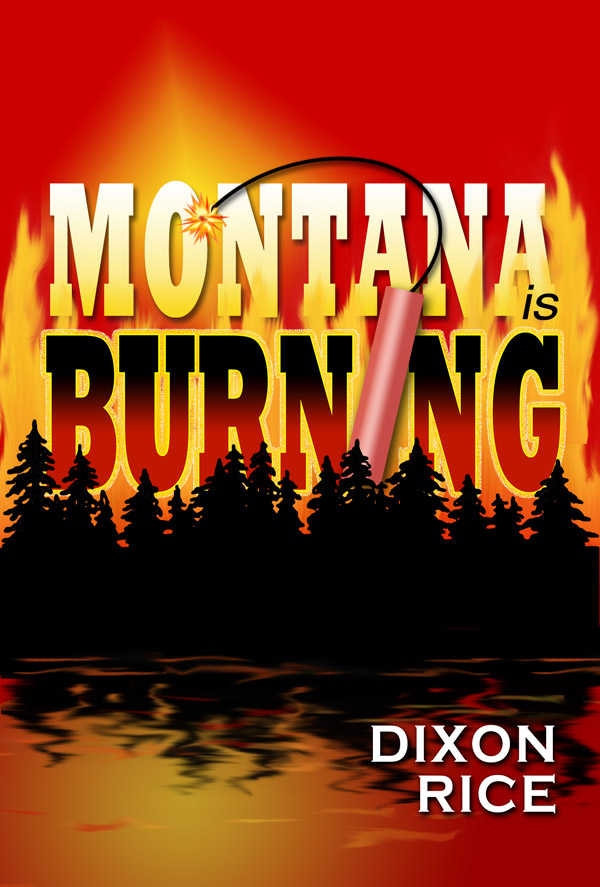
The two previous blog posts have talked about the importance of setting, and the possibility it can actually become a character in your story - think The Perfect Storm. Another consideration is the use of setting to reinforce the mood and themes of your story. There’s a reason few noir scenes are set on sunny California beaches. The following is the third excerpt from my forthcoming thriller, Montana is Burning, which will be out in Kindle this summer.

The golden eagle sliced through the air, miles from where scattered rain drenched a small clearing and the stream that ran through it. She spiraled upward with little effort, riding a thermal current as she waited for the storm to break up.

The eagle was the perfect aerial predator, with cruel talons and a beak that could disembowel an adult sheep. She was death from the sky. Lacking an owl’s night vision, she couldn’t hunt after dark, even though high winds had kept her pinned to her aerie for more than a week and starvation threatened.

She circled and watched. In a valley far below, dry lightning struck a large snag and it burst into flames. Since no animals fled from the fire, the eagle quickly lost interest. She flew on.

The isolated storm finished venting its fury on the clearing and sped east. Dim memories drew the eagle above a stream where salmon returned each summer’s end and trout grew fat and pink on the helpless spawn – ancestral memories of hunts and feasts by eagles long dead but memories no less real. The raptor smelled blood and tasted flesh as if the kills had been her own.

The great bird spotted the glitter of whitewater skittering across rocks made smooth by eons of glacial runoff, and saw dark shapes carving their way beneath the surface.

She dipped a chocolate-brown wing and dropped below the air current. The eagle descended slowly at first, then folded her wings next to her body to plunge like lightning drawn to earth. Her freefall lasted hundreds of feet before she spread wide her wings, pulling out of the meteoric dive. With hardly an eddy on the water’s surface, she ripped a trout from the icy stream and started back to her craggy perch, blood on her talons and savagery in her cry.

As she climbed through the warm air, the golden eagle spotted the valley where lightning struck a snag earlier. Flames burned greedily and jumped to neighboring scrub pine. Only the eagle saw.

In the great bird’s wake, a wolf erupted into the opening and sprang across the stream, but the whitetail he had been stalking already bounded far down the slope, startled by the exultant screech from above. Stopping at the edge of the clearing, the wolf listened to the doe’s flight.

The wolf turned from the fading sound of escape. He jogged toward remembered cattle.

The world, after all, was full of prey.

Monday, February 13, 2012

Tip O'Day #291 - Setting as a Character

Setting can become a character in your story. In my novel Montana is Burning, a forest fire serves as not only backdrop, but also antagonist and instigator of events. In this second part of the novel excerpt, the fire faces death but survives.

The golden eagle circled high over a remote valley twenty miles west of Kintla, Montana.

A burning snag sent a faint column of smoke aloft. The eagle knew fire usually flushes small animals from their hiding places but not this time. A pine beetle infestation had devastated the valley, leaving behind mostly rotten stumps and scarcely any healthy trees. Despite a huge insect population, there were almost no green branches and so hardly any rodents, birds or small game lived there. Above the size of centipedes, practically no life survived in the valley.

The great bird found a sturdy branch high in an ancient pine. She waited.

Like waves rippling out from a pebble dropped in a fiery lake, a circle of flame spread around the snag, painting the pale underbelly of the clouds an angry red. The lower branches of several nearby spruce caught fire. The expanding pool lapped across the matted carpet of pine needles, burning into the forest floor until it ran out of air.

A dark cloud passed overhead, so heavy with water vapor that it began to condense. A shower doused the valley and the eagle sought shelter on a lower branch.

Flames hissed and wavered and then finally failed. As if to signal the fire's defeat, the blackened snag teetered and fell. A cloud of ash rose into the damp air then pelted back to earth with the rain.

The snag lay on its side like some grotesque wounded beast. Sheltered from the rain, its underside reflected a dim glow against the ruined forest floor. The fire lived.

The golden eagle took wing and continued her hunt.

This three-part novel excerpt concludes tomorrow, when wolf and eagle meet one another.

Sunday, February 12, 2012

Tip O'Day #290 - Setting is Crucial

I mostly put up guest posts from other writers because I think we can learn a lot from the success and failures of others, even the least experienced. However, my “Wolf & Eagle” excerpts from the forthcoming thriller Montana is Burning have had the most hits by far over the last few years. For the success of a novel, I believe setting can be just as important as character and story. The following is my attempt to convey a sense of the Montana wilderness.

As shadows lengthened in the forest, a wolf waited.

He awoke at daybreak far to the north with an empty belly. The last surviving member of his pack, he’d eaten nothing but a few rodents the last few days. Alone, he had little hope of killing larger prey.

The wolf turned south and loped toward memories of slow-moving cattle that grazed away from human scents. He stopped to rest when the sun shone directly overhead. A swath of land denuded of trees stretched into the distance to both left and right. He could smell and hear much further than he could see, and sensed no men nearby. He sprinted across. He rested again and then urinated to mark his mission and direction of travel before continuing the journey. The wolf trotted over the Whitefish and Salish Mountains before a familiar scent stopped him on the edge of a grassy meadow.

The cattle still lay in his path but only after many hours’ travel through rolling sand hills. His stomach ached. The wolf ignored his hunger and waited.

Shadows stretched into the clearing below him, masking a swift stream in smears of gray and black. The wolf breathed deep of the warm air and smelled deer.

A female. Closer this time. Down-slope and upwind.

The wolf tensed his haunches in readiness.

The whitetail deer edged closer through the shadows, yet not close enough.

The wolf felt the weather change. A storm front was passing by. The humidity rose as clouds rolled overhead, smothering the landscape in featureless murk. Lightning crackled in the distance.

The lone male might as well have been blind. Yet he smelled the sweet fragrance of tamarack, pine and aspen, the loamy earth, the rich droppings left by beast and bird, and the salty blood coursing through the doe. Even through the noisy turbulence of wind and nearby stream, he clearly heard the prey set one hoof on a leaf.

The wind began to swirl. A fat plop of rain struck the cracked earth between his paws. Water sprinkled across the parched clearing. He sensed dusty treetops shuddering at scattered drops. A blanket of heavy, moist air settled around the hunter and now he sensed only water.

He stretched out on his belly and waited.

This is the first of three posts, to be continued tomorrow. Look for Montana is Burning on Kindle this summer. Suzanne Parrott of Unruly Guides designed the book cover.

Saturday, February 11, 2012

Tip O'Day #289 - Writers, Be Readers

Guest blogger David Cleinman thinks writers need to be readers.

One reason it’s important for writers to read is that there tend to be standard conventions within each genre that readers expect to see. If they’re not there, or are twisted in strange ways, or even broken, it makes the writer look bad and loses future readers.

An even better reason is personal expansion. Great authors tend to evolve over time. They practice, tweak, learn how to use techniques. They learn the way words work to elicit responses from readers. All of this requires time, patience, research, and observation. Reading other authors gives us working examples of these concepts and allows us to expand our own arsenal of writing techniques.

A third reason is the fact that most of us began writing because we love literature and stories. We are captivated by characters, provoked by plots, wound up by words, and struck by stories. Reading takes us places we could only imagine, lets us be heroes, or villains, allows us escape, and keeps us enthralled in our own world, even when that world was created by another. We can see ourselves as Alexander the Great, Napoleon, Frodo Baggins, Muad’Dib, Joan of Arc, Harry, Hermione, or Ron, Viking raiders, Dragon Lords, King Arthur. Reading makes it easy to be someone else for a while.

This is the thrill of reading, and so it becomes the magic of writing. We get to take others on a journey with us, share worlds of our design, characters of our creation, ideas that move the heart, or shake up the universe. We become captains of a ship with unlimited possibilities. It can go anywhere, do anything, connect with anyone, accomplish the impossible, hold unlimited passengers, and break any speed barrier.

Our obligation as authors is to provide the best possible voyage for our travelers. We must give them the trip of a lifetime, and leave them wanting to be repeat passengers. This requires a unique approach, an engaging story, great characters with whom readers can identify, and a knowledge of story conventions which allows for a smooth and entertaining ride. Learning the techniques other authors use is the very best way to master these techniques and fully develop our own writing abilities. We can take classes, and that can help, but only reading gives us the practical insights we need to truly master our craft.

David Cleinman is an Indie author, blogger, and book reviewer. He has two published novels: Toys In The Attic and Principle Destiny, plus MindEater, a Vampire Short. For more information about David, please visit his writing blog or find him at Amazon.com.

Friday, February 10, 2012

Tip O'Day #288 - A Literary Pup

Guest blogger Constance See on how her rescue dog taught her to write.

At age fifty-something, I acquired my first pet ever when I asked my husband to look into adopting a dog. He loved Pepper instantly. I was more reticent, but Pepper looked into my eyes (or smelled the coffee I’d accidentally drizzled down my shirt) and decided we were long lost best friends. Learning to take care of a pet when you’re trying to write was a challenge at first, until I realized the Great Goddess in the Universe had sent her to me as a Muse. Pepper makes sure I get up nice and early (5:15 a.m.) every morning by pushing her wet little nose against my helpless feet dangling off the edge of the bed.

No time to waste, there’s writing and peeing to do!

I stumble out into the cold ebony air, eyes half shut, grumbling about my lack of sleep, but she drags me along sniffing for just the right spot to squat. It has to be where some other dog left their sign. I just got that lesson. Years ago I started a great romance novel, but at page 80, I stopped to read a new one and was devastated – her plot was very similar to mine. I locked up my ideas and pouted for over a decade!

Dumb-dah-dumb-dumb-dumb.

Pepper knows all. She knows every square inch of earth has a pee stain, just like plot twists have nearly all been written before. The hero or heroine always gets their man. What she taught me today was to sniff out the competition, but squat anyway making my own unique mark.

Finished with our morning ablutions, we race inside for sustenance. Pepper wolfs down her breakfast, reminding me not to dawdle at minor tasks. Then, she flops on her belly, head held up like the Egyptian Sphinx, watching over me, to keep those pesky distractions at bay. She has a very important job, keeping me focused on what really matters – a tail-wagging ending.

Wednesday, February 8, 2012

Tip O'Day #287 - A Facebook Fan

Guest blogger Jo Marshall brings enthusiasm to social networks.

A little late to the game, I only began using Facebook two months ago, initially setting up my author and book page to showcase my Twig Stories book series. Very quickly, however, I began using Facebook to reach out to other authors, librarians, teachers, professors and news media. I learned more about climate change, the environment, agents of change in conservation efforts, and the many wildlife nonprofits. Suddenly I was 'linked in.'

I have several lists that reflect my many interests: Librarians, Teachers, Universities & Colleges, Wildlife & Environmental Nonprofits, Literary, Media, and for those who feel compelled to post more than ten updates a day, I file them in 'Friendliest.' Of course, I also have a Close Friends file.

Facebook is an excellent way to gather news in one long stream. Every day I open it up as I would a newspaper...and read and read and read. Within an hour I can cruise the BBC, NPR, science journals (I'm a member of the Society of Environmental Journalists), children's literacy sites, book reviews, library events, current affairs, and author accomplishments. I really enjoy lively societies such as professional storytelling guilds and book groups.

I guess it’s obvious - I'm a real Facebook fan.

This writer will be back in a few days with more on social networking. To learn more about Jo Marshall, go to her Twig Stories website.

Tuesday, February 7, 2012

Tip O'Day #286 - A Tough Road for Indies

Tom Isbell, author of Southern Cross, on Indie Success.

Independent authors are caught in a vicious circle. Manuscript editing and cover design services cost money. If you have investigated using professional services, you know what I’m talking about. Considering the average author is lucky to sell over 300 printed books, it doesn’t take long to expend way more on publishing than can be netted by sales. There are notable exceptions and maybe you know one, but tales of success should be prefaced with: “These results are not typical.”

So what can the not-so-rich, independent authors do to ensure their manuscripts are the best they can be? Seek out and join a local author critique group of like-minded writers, hopefully with some successfully published authors. Your friends and relatives may read your manuscript, but they will never tell you that it sucks. The sucky part has to come from other people. Remember constructive criticism is the key. Nothing is personal. Good editing is not just grammar and punctuation, but also evaluating execution – point of view consistency, syntax, poor plot, and implausibility.

Tom will be back in a few days with tips on book covers. In the meantime, check him out at his website or Facebook.

Monday, February 6, 2012

Tip O'Day #285 - One Writer's Process

How guest blogger Aleksandra Zaric created a book.

The only way to complete your book is to “just write.” Consistently write on a daily basis, with goals in place. I would set my alarm at 4.00 am and go straight to my computer to write for a couple of hours. Whenever a thought would pop into my mind during the day, I would immediately write it down to include it in my book later on. If you don’t do that, you’ll forget it.

I set myself a goal to complete the manuscript by a certain date, no matter what. Despite becoming constantly sleep deprived, I found this was my only way to stay consistently motivated. It doesn’t matter how poorly written the first draft is; you can always polish and edit at a later stage. Geez, the amount of time I read and re-read the book and tweaked it here and there…hundreds of times until I couldn’t stand it anymore.

Once that stage is done, get a manuscript appraisal – a professional to critique your work. For me, this was well worth the investment of $400-$500 for a 60,000 word manuscript. Still, I was nowhere near finished. I used the appraisal to improve my work even further, a process that took longer than writing the original draft. I then got another manuscript appraisal which was much better. Finally, I submitted it to an editor who helped me fix it even more.

Check out this author at her website.

Sunday, February 5, 2012

Tip O'Day #284 - "Grab 'Em by the Collar"

Your genial host, novelist Dixon Rice, tries his hand at writing a blurb.

Joanna Penn recently blogged about what makes an effective book blurb in The Creative Penn. It needs to be brief, no more than 100-150 words. If space allows, you may want to make some about the author remarks, but be sure to include:

(1) A hint of the plot.
(2) Use of words that evoke images and resonate with readers of the genre.
(3) Main characters named and characterized.
(4) Idea of setting.
(5) A question or a hint of mystery that draws the reader in.
(6) Some hyperbole.
(7) Finally, quotes about the book or previous books by the author.

I like Joanna’s analysis. A blurb should be some of your best writing, not feeling like a book report. It should briefly convey a sense of the plot, setting, main characters and themes. A blurb needs to grab readers by the collar, getting them to look at the opening page (or click on the online sample pages) to see if the writing lives up to the hype. Following is my 150-word attempt to apply this concept to my novel, The Assassins Club.

Deputy Marconi spoke softly. “We know you’ve been killing people, Ty…”

Deputy Trueblood pushed his partner aside. “The point is, we want in.”

Ty blinked. “Excuse me?”

In Montana’s Rocky Mountains in the 1970s, college student Tyler Goode figures he “accidentally” became a serial killer.

Another serial killer, a bearded, thirtyish man, emerges nude from the ocean in Baja California. He thinks he is Jesus. He walks up the coast, killing when it pleases him, and gathers a Manson-like tribe of losers.

Ty and Jesus eventually collide in this fast-paced suspense-thriller, but only one will survive to pursue his addiction.

See why reviewers say: “…so fast moving, you don't stop to think how it's all going to end. But even if you did, it will still be a surprise.”

“So real you can taste it.”

“An engrossing read with a compelling plot... This novel will keep you guessing until the end.”

So what do you think - did I grab you by the collar?

Saturday, February 4, 2012

Tip O'Day #283 - How You Choose a Book - II

How three more readers select a book.

Cindy Davis - After being an editor for so many years, I am hard to please. I choose a complicated plot--usually mystery. I enjoy unraveling plot lines.

Luna Sweete - If a book has a horrible cover or an uninteresting blurb I will not pick it up and buy it or read it. It could be the best book in the world and I would never know it.

Aleksandra Zaric - For me it’s always been the initial appeal of the front cover. If the synopsis sounds okay and it’s within the genre that I like, then I’ll buy it. The price is not really a concern. I think it’s really worthwhile for any self-published author to utilize some of the best cover designers in the industry. It is really worth the investment.

Friday, February 3, 2012

Tip O'Day #282 - How Do You Choose a Book?

How three readers select what to read:

Tami Kidd - I have a lot less time for reading now, but when I do I read what I think I will enjoy. I usually stick to mysteries, paranormal, some romance. I have a two hour commute to work every day, so audio books have been a blessing.

Cathy Speight – I’ll read anything, especially if it is a genre I have not tried before. Review list aside, I have a somewhat eclectic taste in books. I only read e-books (clarity, font size, etc). I download heaps of free books. Unlike some, I don't believe free = crap. (I also pay for books, within reason.) I glance at the ratings. If they are consistently poor, I will probably give the book a miss, but if they are mixed or consistently good, then I'll give it a go. I buy books on recommendation, also.

Deborah J. Hughes - I look at the cover, of course, but what determines it for me is the blurb. If the blurb is not written well, I expect the book won't be either. So that's it. I buy a book on personal recommendation, reviews and their ratings, and a well-written blurb.

Three more readers speak up tomorrow.

Thursday, February 2, 2012

Tip O'Day #281 - A Writing Coach

Guest blogger Rebecca Scarberry on being coached.

Once in a while someone enters your life and you learn something from that person that changes your life forever. As an aspiring author of fiction that happened to me when I met author Des Birch. I read three books written by him and gave all three 5 star reviews. It was after Des read a short story I had written, he decided to coach me.

It took a while, but it finally dawned on me, he wasn’t trying to teach me to write in the same style as he writes or the same genre. Des was trying to get me to fully understand my protagonists, practically, physically and psychologically. I now see that you can’t even begin to write a story until you do. If you don’t, the readers spot this right away and when they have finished reading your story, they have too many unanswered questions. With each character in your story, you must become that person to a great extent.

To learn more about Rebecca, go to her blog or check out The Kindle Book Review.

Wednesday, February 1, 2012

Tip O'Day #280 - Bad Reviews from Mean People

Guest blogger Deborah J. Hughes on reviews.

Although authors can get friends and family to write a review, I'm thinking it isn't as easy as they think. In my case, the ones who wrote a review genuinely liked the book. For those who didn't think the story was their cup of tea, they chose not to review it. That doesn't mean the reviews written by those who did like it should be dismissed, however.

As for me, I won't buy a book that hasn't been reviewed. I don't pay attention to 1 and 2 star reviews. Even the really bad books deserve some credit for being written (it's not easy to write a book!) and I think people who give 1 and 2 stars are just being mean. If you have real issues with a book, personally contact the author and tell them what bothered you; give them a chance to decide if they agree and fix the issues.

Dixon says: When I’m asked to review a book, I explain my procedures to the author. If I feel the book is worthy of 4 or 5 stars, I’ll post that review without any discussion. If I think it deserves 3 stars or less, I’ll forward my review to the author for his or her consideration. Some writers are happy with any reviews, no matter how negative, whereas other authors feel a review of 3 stars or less can hurt future sales. Since I am also an author, I think it’s a professional courtesy to allow the book’s writer to decide whether or not to publish the review.

Monday, January 30, 2012

Tip O'Day #279 - Who Do You Write For?

Guest blogger Thomas Avery on writing for your audience.

I believe, as an Indie writer, I connect best with people of similar interests, rather than a broad audience.

My writing entertains me and that is who I write for first. Not everyone wants to read a mystery about an actor/aviator from the 1930's who drinks too much. My passions have always been mystery novels, classic films and aviation. I have tried to inject these into my novel and I had fun, too. My philosophy: if it entertains me, it will entertain someone else too.

This author writes under the name T.E. Avery and his first e-book will be published soon on Kindle. Learn more here.

Saturday, January 28, 2012

Tip O'Day #278 - Think in New Ways

Novelist Amy Charlotte is today’s guest blogger on the topic of freshness.

Try to describe things in fresh, new ways. I can't emphasize that enough. Avoid cliches. Write about what you're passionate about. When you're writing imagine the smell of an absent lover's shirt.

Listen to songs that evoke strong feelings. The Elvis tune, “I’ll Be Home on Christmas Day,” is one of my favorites to listen to while writing.

Dixon says: It's amazing how sensory inputs can lead to more sensory writing. An old lover of mine liked to sprinkle herself with baby powder instead of cologne, and the talcum scent never fails to put me in a bittersweet, reminiscent mood. For me, listening to favorite old artists like Moody Blues, James Taylor, Electric Light Orchestra or Carly Simon also seems to get the creative juices flowing.